Jensen Huang projects $1 trillion in Nvidia hardware revenue through 2027 at GTC
Nvidia CEO Jensen Huang told investors at the company's GPU Technology Conference that Nvidia's hardware revenue could total $1 trillion through 2027, a projection that lands roughly $50 billion to $70 billion above current Wall Street consensus estimates for the same period. The number is large enough that it requires some unpacking. Huang is not projecting a single year of $1 trillion in revenue. He is projecting cumulative hardware revenue across the full 2025 through 2027 window, driven by what he described as accelerating demand for AI inference workloads.
Inference is the part of AI that actually runs in production. Training a large language model requires enormous compute for a finite period, but inference, running that model millions or billions of times daily to serve queries, requires continuous hardware investment at scale. Huang's argument is that the inference demand from deployed AI applications is growing faster than most financial models assumed, and that Nvidia's chips are the primary hardware capturing that spending.
The gap between Huang's projection and Wall Street estimates
Current consensus estimates compiled by Bloomberg put Nvidia's hardware revenue at approximately $230 billion for fiscal year 2026 and $260 billion for fiscal year 2027, totalling roughly $490 billion across those two years. Adding fiscal year 2025 revenue of approximately $130 billion brings the three-year cumulative total to around $620 billion under current consensus. Huang's $1 trillion projection implies that actual revenues will run about $380 billion higher than what analysts are currently modelling, spread across the same period.
That is a significant divergence. Nvidia has beaten consensus revenue estimates by meaningful margins in recent quarters, including a 22% beat in its fiscal Q3 2025 earnings report, so the market has learned not to dismiss Huang's projections out of hand. Whether this specific number holds depends heavily on how quickly enterprise AI inference spending scales and whether competitors can take meaningful market share before 2027.
What Huang announced about new hardware at GTC
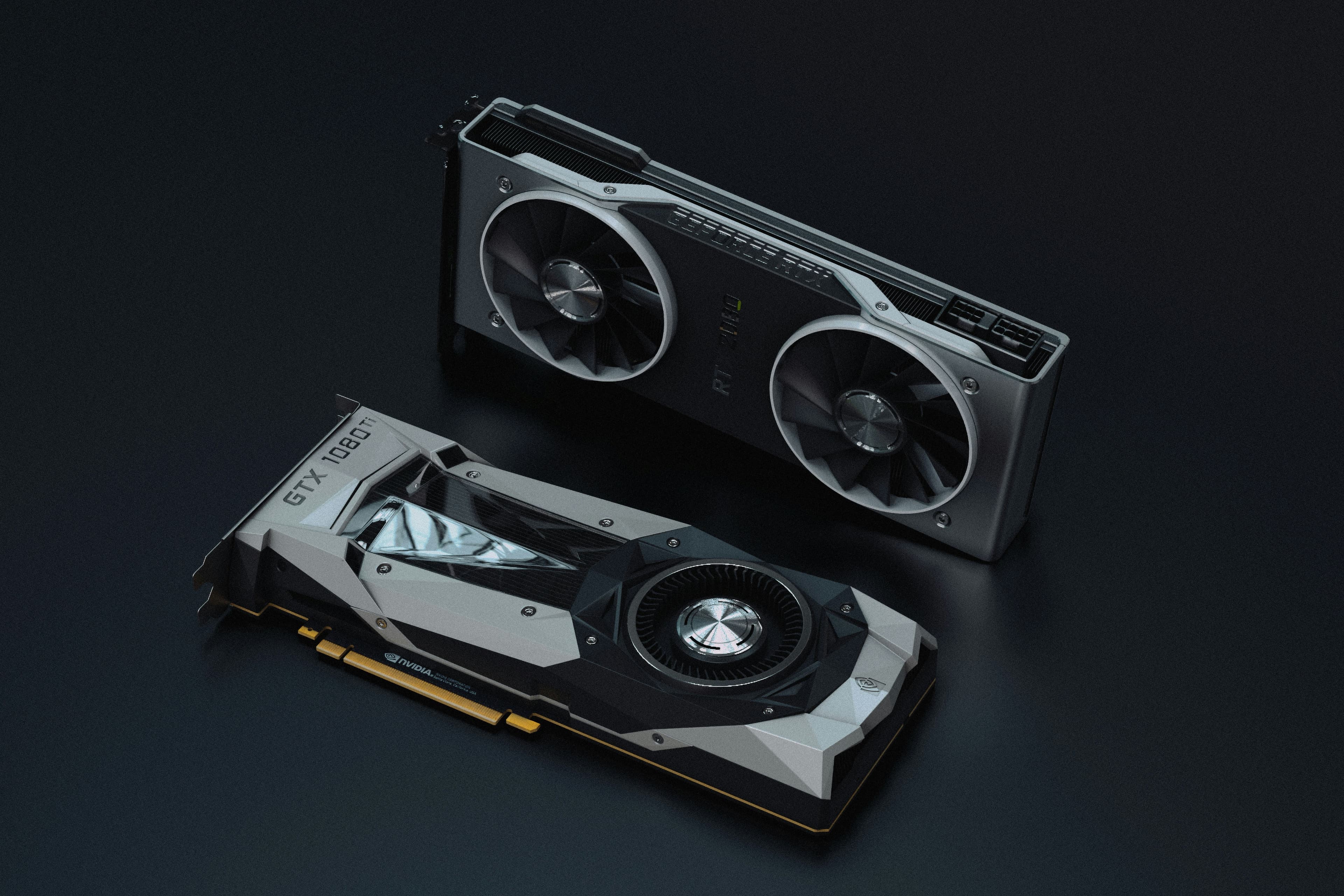
Huang unveiled the Nvidia Groq 3 Language Processing Unit at the conference. The LPU is specifically designed for inference workloads rather than training, with a chip architecture optimised for the sequential token generation that large language models require at runtime. Groq's original LPU design had demonstrated significantly faster inference throughput than GPU-based alternatives in benchmark tests, and Nvidia's version is its direct answer to that competition entering the inference hardware segment.
Huang also confirmed that the Vera Rubin chip platform is expected to debut later in 2026. Vera Rubin is the successor to the Blackwell architecture currently shipping to hyperscale customers. Based on Nvidia's previous product cycle timelines, Vera Rubin will represent roughly a 2x to 3x performance improvement per chip for training workloads and a similar gain for inference throughput. The platform is named after the astronomer Vera Rubin, continuing Nvidia's practice of naming major chip architectures after scientists.
Why inference demand is the central argument
The AI hardware market is in the middle of a structural shift. Through 2023 and most of 2024, the primary driver of GPU purchases was training: building the large foundation models that now power most commercial AI products. That spending is not going away, but it is maturing. The hyperscalers, Microsoft, Google, Amazon, and Meta, have built out substantial training capacity. The next wave of spending is inference, which scales with user adoption of AI products rather than with model development cycles.
OpenAI's ChatGPT processes an estimated 10 million queries per day. Google processes more than 8.5 billion searches daily, a growing fraction of which now involve AI-assisted responses. Every one of those queries requires compute. As the fraction of digital interactions that involve AI inference increases, the total compute demand grows continuously rather than in the concentrated bursts that training cycles create. That is the market dynamic Huang is projecting Nvidia to capture.
Competitive risks to the projection
Huang's $1 trillion projection assumes Nvidia maintains something close to its current market position. That is not guaranteed. AMD's MI300X accelerator has gained meaningful traction with enterprise customers, particularly those running open-source models like Meta's Llama series that do not require Nvidia's proprietary CUDA software stack. AMD's data centre revenue grew 94% year over year in Q4 2025, reaching $4.7 billion in a single quarter.
Custom silicon from the hyperscalers is a separate constraint. Google's TPU v5, Amazon's Trainium 2, and Microsoft's Maia 100 are all designed to run specific inference workloads internally, reducing those companies' dependence on external GPU purchases. If the hyperscalers shift 20% of their inference workloads to internal chips by 2027, the impact on Nvidia's revenue at the scale Huang is projecting would be in the range of $60 billion to $80 billion. The $1 trillion number assumes that internal chip adoption does not accelerate beyond current trajectories.
Nvidia shares rose 4.2% on the day of Huang's GTC keynote, adding approximately $110 billion in market capitalisation. The next earnings report, covering fiscal Q1 2027, is scheduled for May 28, 2026, and will be the first opportunity for analysts to test whether actual revenue is tracking toward Huang's projection.
AI Summary
Generate a summary with AI


