Wall Street Posts Worst Week Since October as Oil Tops $90 and Jobs Report Disappoints
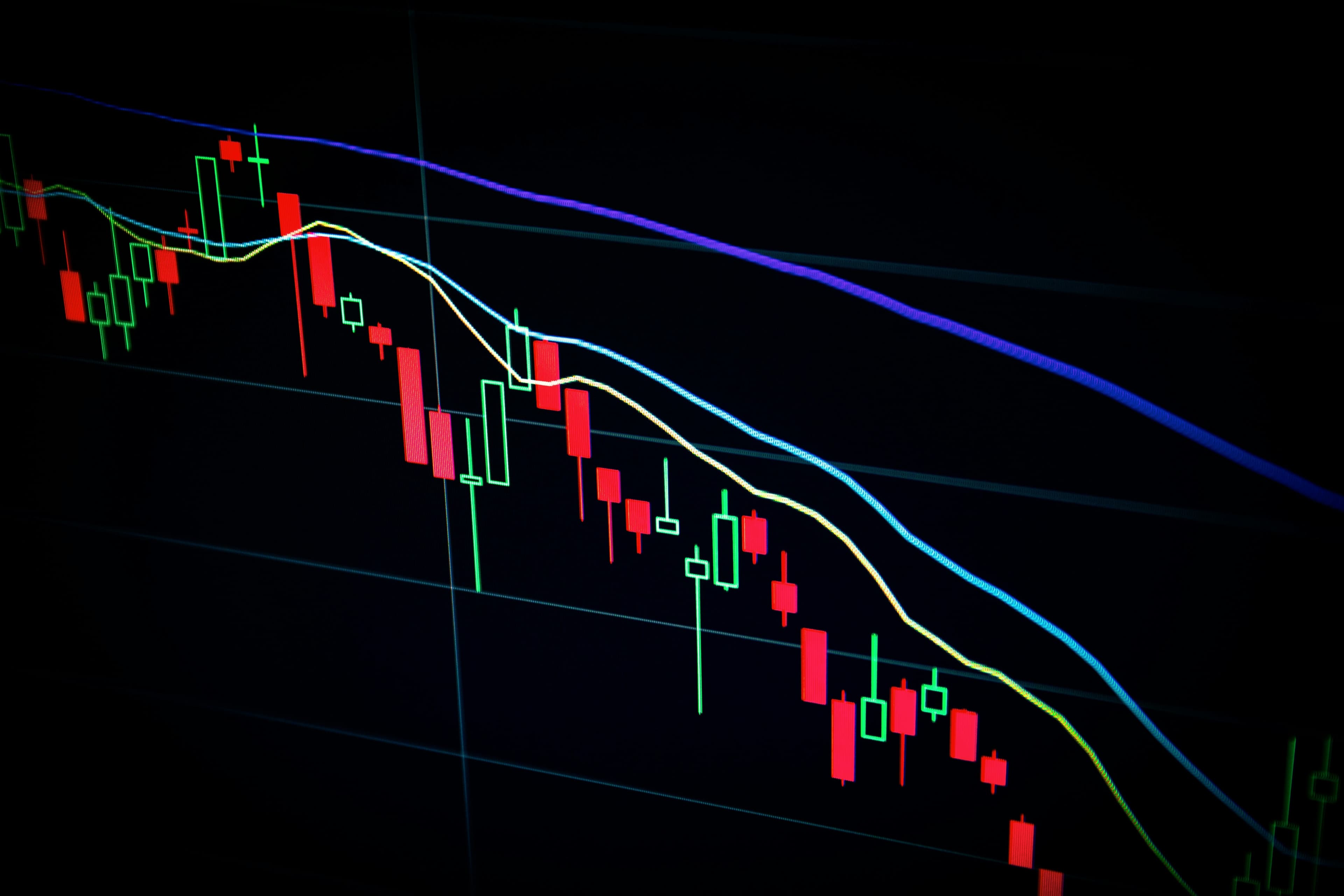
Markets have a way of pricing in fear before most people have time to name it. This week, the fear had a name: stagflation. The S&P 500 closed Friday down 1.3%, capping its worst weekly performance since October, after a jobs report that showed employers cutting more positions than they created landed on top of oil prices that hit $92.69 a barrel for Brent crude — the highest print since September 2023. Two bad numbers in the same session, pulling in the same direction, is not a coincidence that traders shrug off. It is the kind of combination that forces a reassessment of what the next twelve months look like.
The stagflation word is being used carefully by most economists — it carries enough historical weight from the 1970s that nobody wants to invoke it casually — but the conditions that make it relevant are present and getting harder to dismiss. Prices are rising, driven by energy. Growth is weakening, signaled by the labor market. And the Federal Reserve, the institution Americans have come to rely on to manage one or the other, is sitting in a position where addressing inflation means tightening into a weakening economy, and supporting growth means tolerating inflation that is already painful for consumers. There is no clean option on that menu.
What the Jobs Report Actually Said
The February employment report was worse than the headline number suggests, and the headline number was already bad. US employers shed more jobs than they created on net for the month, a reversal that most forecasters did not anticipate heading into the release. The consensus expectation had been for modest but positive job creation — somewhere in the range of 130,000 to 150,000 positions. The actual number came in negative, which has not happened outside of pandemic-adjacent periods in several years.
The sectoral breakdown adds context that makes the number more complicated rather than less. Federal government employment fell sharply, reflecting the ongoing effects of DOGE-driven workforce reductions across multiple agencies. That component of the weakness is policy-driven rather than cyclical, which matters for how the Fed interprets the signal. Private sector hiring was softer than expected but remained positive in some categories — healthcare, leisure and hospitality, and certain professional services continued adding positions. The goods-producing sectors were notably weak, with manufacturing and construction both posting declines.
The unemployment rate ticked up slightly, and labor force participation declined. Average hourly earnings grew faster than expected year-over-year, which under normal circumstances would be welcome news for workers but in this environment is another inflation input that complicates the Fed's calculus. A labor market where employment is contracting but wages are still growing is exactly the kind of data configuration that makes conventional monetary policy tools feel inadequate.
Oil at $92.69 — The Iran War Premium in Full View
Brent crude's move to $92.69 per barrel on Friday was the week's other major market story, and the two are directly connected. The Iran conflict has inserted a structural risk premium into oil markets that was not there four weeks ago. The Persian Gulf is one of the world's most critical energy transit corridors, and any scenario in which that transit is meaningfully disrupted — whether through direct attacks on infrastructure, insurance-driven shipping avoidance, or Iranian attempts to restrict Strait of Hormuz traffic — removes significant daily supply from a market that was already reasonably tight.
Traders are not pricing in an actual disruption right now. They are pricing in the probability of one — and that probability, which was effectively zero two months ago, is now real enough to move Brent thirty dollars from where it was trading before the strikes began. The move from roughly $65 in January to $92 now represents one of the fastest sustained oil price increases in recent years, and its effects are already visible in US gasoline prices, jet fuel costs, diesel for trucking and agriculture, and heating fuel costs in regions that have not yet fully transitioned away from oil-based heating.
Energy equity stocks had a genuinely strong week — Exxon, Chevron, and the broader XLE energy ETF all posted gains as oil prices rose. That divergence, where the energy sector thrives while the broader market declines, is a classic feature of oil-shock market environments and a reminder that the pain from higher energy prices is not uniformly distributed across the economy or across investment portfolios.
The Fed's Impossible Position
Federal Reserve Chair Jerome Powell has been careful in recent weeks to avoid language that would commit the Fed to a specific path. That caution is justified given the environment. The Fed's dual mandate — price stability and maximum employment — has never felt more literally in tension than it does right now. Inflation, measured by the most recent CPI and PCE prints, has been running above the 2 percent target. The jobs report suggests the labor market is softening. Oil prices threaten to push inflation higher through energy and transportation costs even as the broader economy weakens.
In a conventional slowdown, the Fed would cut rates to stimulate economic activity. In a conventional inflation surge, it would raise rates or hold them high. Supply-driven inflation — inflation that comes from an external shock to energy prices rather than from excess domestic demand — is particularly difficult to manage with interest rates, because higher rates do not produce more oil. They can reduce demand somewhat, but the relationship between rate policy and commodity price inflation is indirect and slow-acting relative to the speed at which oil prices move through to consumer prices at the pump.
Fed funds futures markets are now pricing in fewer rate cuts in 2026 than they were a month ago. Some models have pushed the first expected cut all the way to late 2026 or even 2027. That repricing has consequences for the housing market, for corporate debt refinancing costs, for consumer credit, and for the valuation multiples that equity markets assign to future earnings. Higher rates for longer, in an economy that is simultaneously showing signs of softening, is a combination that tends to compress stock valuations — which is part of what investors were selling on Friday.
Sector Breakdown — Who Is Winning and Who Is Getting Hit
This week's market action produced unusually clear winners and losers along sector lines. Energy was the standout gainer, as noted. Defense stocks also had a strong week, consistent with the pattern in any environment where geopolitical risk is elevated and military spending expectations rise. Airlines, by contrast, were hammered — jet fuel is a direct oil derivative, and carriers who have not fully hedged their fuel costs are staring at margin compression that their current ticket pricing may not cover. Consumer discretionary was broadly weak, reflecting concern about the purchasing power impact of higher gasoline prices on household budgets.
Technology had a mixed week that ended on the softer side. The mega-cap tech stocks that dominate S&P 500 weighting have been relatively resilient in recent sessions, but rate sensitivity matters for growth-stock valuations, and the repricing of rate expectations was enough to apply modest pressure across the sector. Semiconductors, which had been benefiting strongly from AI demand tailwinds, pulled back slightly as the macro headwinds temporarily overshadowed the sector's fundamental growth story.
What Analysts Are Saying About the Path Forward
The range of views among Wall Street strategists has widened considerably in the past two weeks, which itself says something about how much uncertainty is embedded in the current environment. The more bearish camp argues that the combination of energy-driven inflation, a weakening labor market, and a Fed that cannot cut without appearing irresponsible will push equities meaningfully lower through the spring — potentially testing the October lows that give this week's performance its unflattering benchmark.
The more constructive view holds that the market has already done a significant portion of the repricing required to reflect the changed macro environment, and that any de-escalation in the Iran conflict — or any signal from the Fed that it is prepared to tolerate above-target inflation temporarily in order to support growth — could produce a meaningful recovery. That scenario requires a geopolitical development that no one can predict with confidence, which is exactly the kind of uncertainty that keeps institutional investors cautious about adding risk at current levels.
Corporate earnings season for the first quarter begins in April. Companies reporting then will be doing so with oil above $90, a softer labor market, and elevated input costs across energy-sensitive supply chains. How management teams guide for the rest of the year — and whether they signal that the current headwinds are transitory or are being built into updated forecasts — will tell investors more about the real economic trajectory than any single weekly market move. That will be the next major data point in a story that this week made considerably harder to read.
AI Summary
Generate a summary with AI

