Trump, Iran and a war the US never planned to fight this way
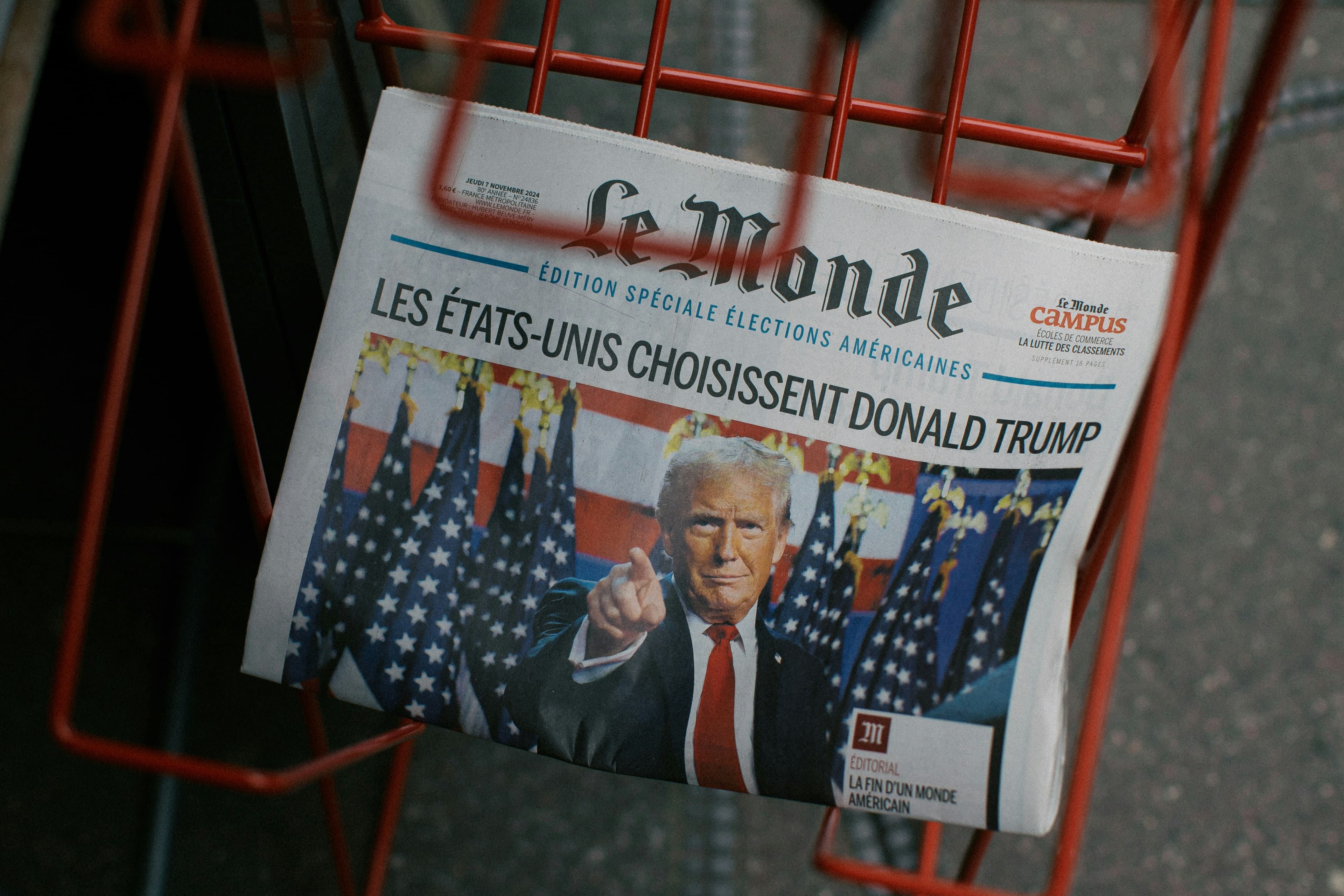
When Donald Trump launched Operation Epic Fury against Iran, the expectation inside Washington was familiar: a short, sharp show of force that would bend a regional rival without serious pushback. Instead, the US president has publicly admitted that Iran’s counter‑offensive has shocked American planners, both in its intensity and in the range of targets hit across the Gulf. The admission cuts through the usual American confidence in distant wars and exposes how badly the White House misread Tehran’s willingness and capacity to hit back.
Iran’s response and the human cost of this war
Prashant Dhawan starts by grounding the conflict in one blunt number: more than 2,000 people killed so far, most of them civilians in Iran, Israel and across the broader theatre of strikes. Behind that figure are families losing breadwinners, children losing parents and communities watching entire apartment blocks reduced to rubble. The war has been raging for 18 days, and there is little in the current tempo of missile exchanges and airstrikes that suggests it will quietly end within March. If anything, the fighting now looks set to spill deep into April or beyond.
Iran’s response has been far more expansive than Washington expected. Instead of absorbing the first wave and retreating into defensive posturing, Tehran fired missiles and drones at energy and strategic sites in Qatar, Saudi Arabia, the UAE, Bahrain and Kuwait. These are not marginal outposts but critical nodes in global gas and oil supply and hosts to key US bases. The message was simple: if Iran is hit, the wider Gulf network that supports American power will feel the pain too.
The economic fallout is already visible in commodity markets. Crude oil has climbed to around 105 dollars per barrel, a level that, if sustained, will filter into higher fuel prices, steeper logistics costs and imported inflation in dozens of countries over the next few months. For ordinary people far away from Tehran or Tel Aviv, this war will show up quietly in grocery bills, bus fares and electricity charges long before they ever see it on a battlefield map.
Why Trump says the US was shocked
In a recent statement, Trump acknowledged Iran as a “great power” in terms of raw capacity to inflict damage, a phrase that carries more weight coming from a US president who has spent years talking up American dominance. He admitted that Washington did not expect Iran to hit so many Gulf states or to target gas fields and infrastructure that feed into Western and Asian energy security. The US had assumed Tehran would either fold under pressure or respond in a limited way that American missile defence could easily manage.
Several American fighter jets have already been shot down, a detail Dhawan lingers on with a touch of sarcasm when he repeats the phrase “beautiful fighter jets.” For a military that prefers to fight from the air with minimal losses, watching expensive aircraft fall to Iranian air defences is more than just a tactical setback. It undercuts the psychological aura that US air power usually carries into a conflict and raises questions inside the Pentagon about how much hardware it is willing to trade for political goals in Tehran.
The deeper issue, as Dhawan frames it, is habit. For decades, US wars have followed a familiar pattern. In Iraq, the invasion quickly toppled Saddam Hussein. In Afghanistan, the initial phase removed the Taliban government in a matter of weeks. In Serbia, heavy bombing went unchallenged by any serious counter‑strike on US soil or bases. Even in Venezuela and other states that faced American pressure, there was no sustained military response that truly hurt US assets. Iran has broken that pattern by refusing to play the role of the quiet victim.
Miscalculation, escalation and the risk to the global economy
Trump’s admission that he did not expect Iran to fight this way points to a serious miscalculation in Washington. The US leadership appears to have underestimated both Iran’s missile range and its political appetite for escalation, even at the cost of heavier sanctions and internal damage. Once a war reaches this stage, taking a step back becomes politically expensive. Any compromise starts to look like defeat, especially for a president who built his image on toughness and refusal to back down.
Dhawan argues that an intelligent leader would start looking for a U-turn before the cost curve steepens further. Every extra week of fighting means more civilian deaths, more destroyed infrastructure and more pressure on the global economic system. The longer oil stays elevated, the more governments will be forced into painful choices between subsidies, higher taxes or spending cuts elsewhere. For countries like India that import most of their energy, this conflict is not a distant news item but a direct threat to growth and jobs.
At the same time, there are emerging signs that Russia and China are quietly helping Iran rebuild and sustain its military capacity. According to Dhawan, equipment, spare parts and possibly intelligence support are flowing in to keep Tehran’s missile and drone capabilities intact. Their goal is not to hand Iran a total victory but to make sure it can resist long enough to drain American resources and attention. In that sense, the war over Iran is also a proxy test of how far Washington is willing to stretch itself while it already has commitments in Europe and the Indo‑Pacific.
Can India mediate between the US and Iran?
With the conflict grinding on, the search for a mediator has begun. The president of Finland recently floated India’s name, arguing that New Delhi is one of the few capitals that maintains workable relations with both Washington and Tehran. India’s foreign minister, S. Jaishankar, has already called for a ceasefire and a cooling of tensions, a signal that New Delhi is at least willing to be part of the diplomatic conversation. Two Indian ships have also moved safely through the Strait of Hormuz, a sensitive stretch that would be among the first targets in any wider naval confrontation.
On paper, India looks like a sensible choice to host or facilitate talks. It buys oil from Iran, works closely with the US on defence and technology, and trades with Gulf monarchies now directly exposed to Iranian missiles. However, Dhawan points out that mediation will not be simple. Iran will demand written assurances that there will be no repeat of such an attack in the near future and will likely push for financial reparations running into billions of dollars. For the US, paying compensation and signing such guarantees would be politically humiliating, especially under a president who keeps promising to project strength.
Even if India steps in, it would walk a tightrope. Too much sympathy for Iran could anger Washington and key Gulf partners. Too much alignment with US positions could make Tehran treat the entire process as a trap. The best outcome India can probably hope to engineer in the short term is a limited ceasefire: a pause long enough to reduce civilian suffering and stabilise oil markets, but not a grand peace deal that rewrites the entire security order of the region.
Trump’s next target: why Cuba might be at risk
One of the more disturbing threads in Dhawan’s analysis is Trump’s public talk about attacking Cuba once the Iran campaign settles into some kind of outcome. When asked about Havana, Trump described Cuba as a weak nation and spoke of either occupying it or “liberating” it, barely bothering to dress up the intent in diplomatic language. That bluntness reveals how he thinks about smaller countries: as pieces on a board that can be seized or reshaped at will if they lack the means to resist.
From a military perspective, Cuba is far more vulnerable than Iran. It is a small island state near US shores, with limited air defence and no equivalent missile reach. A rapid American invasion would face logistical challenges but nothing like the layered air defences and proxy networks that Iran can mobilise. For Trump, Dhawan suggests, a quick operation in Cuba might look like a way to claim a clear victory if Iran ends in a messy compromise that angers his domestic base.
Dhawan even speculates that Trump may revive his old fascination with Greenland and try again to bring it under stronger American control during this presidency. The idea sounds outlandish at first, but it fits a pattern: bold moves framed as decisive leadership, even if they strain alliances and ignore local sentiment. Seen together, Iran, Cuba and Greenland form a trio of targets that tell you less about strategy and more about one leader’s craving for historic‑sounding wins, no matter the risk.
What this war reveals about American power
In the final stretch of the video, Dhawan returns to a basic observation: for the first time in many years, the US is facing a determined military opponent willing to absorb punishment and hit back in ways that hurt. Iran cannot match American firepower plane for plane or ship for ship, but it has enough missiles, drones and regional reach to make every US move expensive. That alone shifts the psychology of warfare for a superpower accustomed to low‑risk campaigns from the air.
If this war drags on, Washington will not only bleed money and political capital but also lose time and focus it could have spent on its rivalry with China or the conflict in Ukraine. For Russia and China, helping Iran hold out is a cheap way to keep the US busy in yet another theatre. For the rest of the world, especially energy‑dependent economies, the concern is more immediate. They have to plan for higher import bills, jittery markets and the constant possibility that a stray missile or misread radar signal could widen the conflict overnight.
Dhawan closes on a sober note. This is not a cinematic clash between good and evil but a grinding confrontation in which ordinary people pay the highest price while leaders cling to prestige and face. If there is a window for diplomacy, it will probably open not because hearts suddenly soften but because the numbers stop adding up for those who started the war. Until then, viewers and voters have to pay close attention to what is being done in their name, far from home yet very close to their wallets and futures.
AI Summary
Generate a summary with AI

