Tomahawk strike on Iranian girls’ school: how a “misfire” shook India and the world
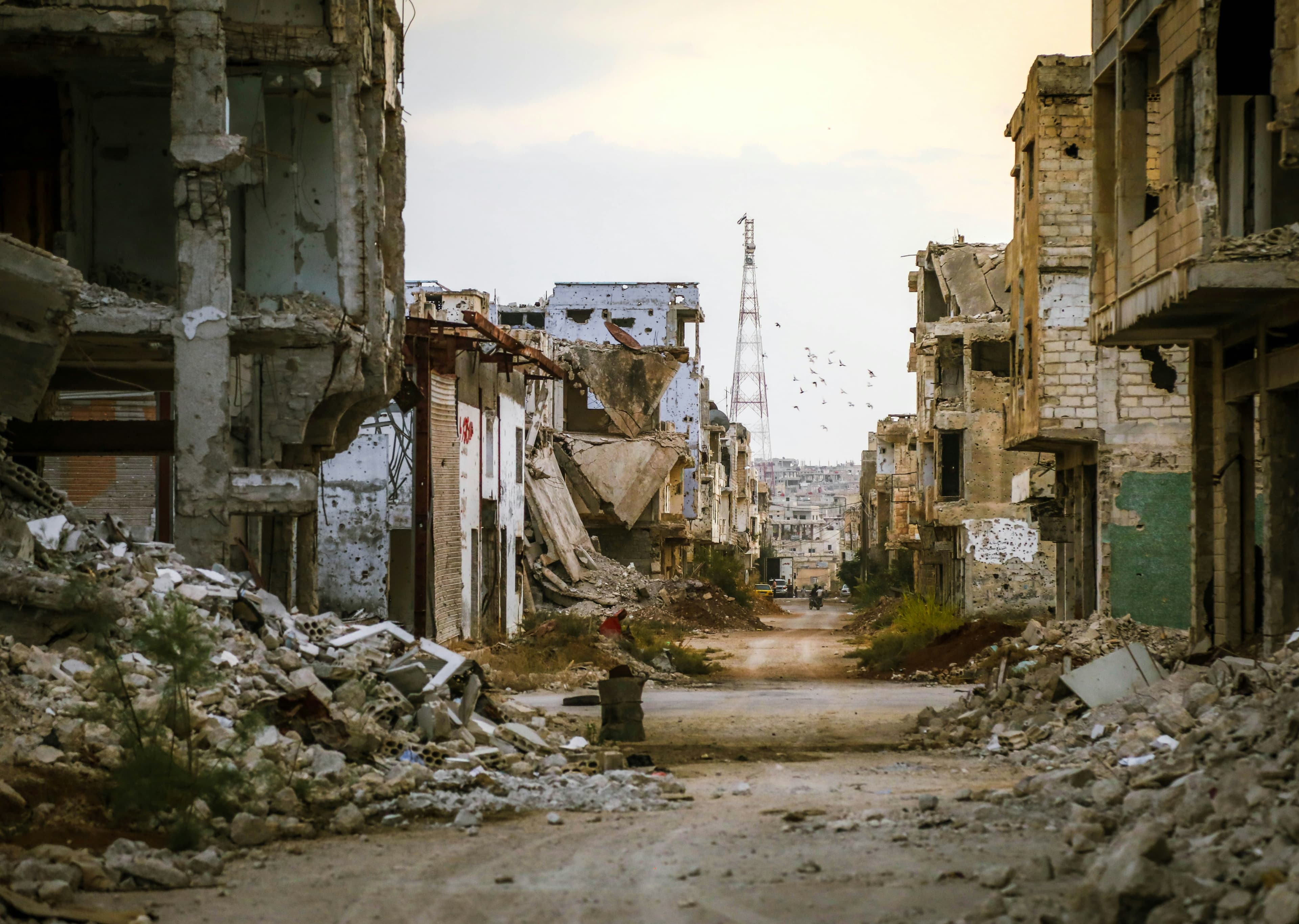
When a U.S. Tomahawk cruise missile slammed into an elementary girls’ school in Iran’s Minab region, killing more than 150 people, most of them young students, it cut through the usual noise of West Asia conflict coverage. This was not a strike on a secret bunker or a weapons depot. It was a classroom full of children, and that single detail has forced governments, media, and citizens far beyond Iran’s borders to pause and confront what modern warfare really looks like when it goes wrong.
India’s official response captured that sense of shock. New Delhi expressed grief over the loss of “precious lives” and specifically mourned the death of children in the bombing of the Iranian school. For a country that often walks a tightrope between Washington, Tehran, and Tel Aviv, this was not just another routine diplomatic line. It reflected how hard it is to justify a strike when the primary victims are girls aged roughly seven to twelve, sitting in classrooms that should have been the safest place in their city.
What happened in Minab: target, school and a fatal error
The strike took place during the U.S. operation codenamed “Epic Fury,” conducted with Israel against Iranian targets. On paper, the likely target near Minab was an Iranian naval compound located close to the coast. Tomahawk missiles were launched from U.S. naval ships with that facility in mind. In practice, at least one missile did not behave the way planners expected. Instead of stopping inside a military complex, it tore through an elementary school situated disturbingly close to the naval installation.
Maps and satellite visuals of the area tell a simple but uncomfortable story. On one side, you see the Iranian navy compound, a legitimate military target under most readings of the laws of war. Right next to it stands the school building that ended up completely destroyed. That proximity is now at the heart of the debate. Either the missile’s guidance drifted, or the targeting data did not reflect how developed the area around the base had become. In both scenarios, the children in those classrooms had almost no chance.
European media outlets and early findings from a U.S. military investigation point in the same direction: this was very likely a misguided American strike. Reports mention outdated targeting data and a missile that failed to track its intended path accurately. In war rooms, “misfire” is a technical word. On the ground in Minab, it translated into mass graves being dug in a hurry for dozens of schoolgirls who never had any say in the conflict unfolding over their heads.
Trump’s shifting story and the blame game
The political fallout intensified when journalists grilled U.S. President Donald Trump on the strike. Initially, he suggested that Iran might somehow have acquired a Tomahawk missile and fired it at its own school. The idea did not hold up well under basic scrutiny. Tomahawks are not black-market gadgets. Washington sells them to a small group of close allies such as the United Kingdom, Australia, and a few European partners. Iran is nowhere near that list.
Pressed for details, Trump conceded that he did not know enough about the specific incident and that the matter was under investigation. He still tried to keep the door open for theories involving other countries that also operate Tomahawks. The problem is that public evidence, early military assessments, and independent reporting steadily narrowed the plausible explanations. The more facts surfaced about launch platforms, trajectories, and the local geography around Minab, the harder it became to sustain the claim that Iran might be responsible for the missile that hit its own children.
For Trump, the stakes are higher than a single bad press conference. He has spent years describing himself as a dealmaker who prevented wars and even floated his name in the context of the Nobel Peace Prize. A school full of dead children tied to a U.S. strike cuts directly against that self-portrait. That is why talk of possible war crime allegations is surfacing. When the victims are clearly under eighteen and the target clearly non-military, international law becomes much less forgiving, even for world powers used to operating with wide latitude.
International law, children, and the red line around schools
There is a reason human rights lawyers keep returning to one basic point: schools full of minors are not supposed to be anywhere near a targeting list. International humanitarian law sets a high bar for protecting children in conflict zones. States are expected to avoid striking locations where anyone under eighteen is likely to be present, unless there is absolutely no doubt that the site is being used directly for military purposes and that no alternative exists.
In Minab, the building destroyed was an elementary school with students roughly between seven and twelve years old. United Nations experts have already issued strong statements demanding an independent investigation into the missile strike on the girls’ school. Their argument is straightforward. Even if the missile was not meant for the school, the responsibility does not end with the word “mistake.” Military planners are expected to factor in civilian infrastructure, especially schools and hospitals, when they draw up target lists and update their maps.
The United States may try to argue that Iran contributed to the risk by allowing a school to exist so close to a naval compound. That angle will have some traction in legal discussions, but it does not erase the basic duty of care attached to launching long-range precision weapons. If your targeting data is old, you update it. If civilian buildings have grown around a base, you rethink your strike profile. When you do not, and an entire school is wiped out, lawyers and investigators will eventually want names, timelines, and signed orders.
India’s reaction and China’s compensation gesture
India’s statement on the attack was measured but emotionally clear. New Delhi expressed sadness over the missile strike on the Iranian girls’ school and specifically mentioned grief for the children who died. This came despite India previously criticising Iran for attacks on targets in the United Arab Emirates and Saudi Arabia. The difference here is simple. Geopolitical disagreements vanish quickly when faced with images of rows of small bodies being buried together after a single blast.
China chose a more direct route by announcing a compensation package for the families of the victims. Beijing pledged one million dollars, roughly 1.8 crore rupees, for those affected by the school strike. The amount itself will not repair what happened in Minab, but the gesture carries its own message. While Washington digs through its investigation files and tries to manage the narrative, another major power is visibly siding with the families, at least financially and symbolically.
Together, these responses show how the Minab strike slices across usual alliances. India, often close to the U.S. on strategic issues, still felt compelled to speak about the tragedy. China, frequently at odds with Washington, used the moment to project itself as a supporter of civilians caught in the crossfire. Iran, of course, is likely to use both moves to argue that even U.S. partners and rivals see a serious moral and legal problem in how this missile found its final coordinates.
Media, investigations and the question of accountability
One detail that stands out in this case is how quickly major Western outlets moved away from initial ambiguity. The New York Times and other European publications have already run pieces stating that early investigations point to U.S. fault in the school strike. They mention misguidance of the missile and reliance on outdated targeting data. That runs counter to the usual pattern where domestic media often offers more cover to their own governments, especially in the early days after a controversial operation.
On the human rights side, the United Nations Human Rights Office has called for an independent probe into the attack. It is not just asking who pushed the button, but who approved the target list, what intelligence was used, and whether anyone raised concerns about the school’s location. These questions matter because they map the chain of responsibility from on-the-ground operators all the way up to senior political leaders. The closer investigators get to the top of that chain, the more uncomfortable life becomes for people like Trump and his defence chiefs.
Meanwhile, images from the burial site near the school have started to define the tragedy in a way no technical briefing can. Mass graves had to be dug because so many children died at once. Families who sent their daughters to school in the morning ended the day standing over freshly filled mounds of earth. That visual reality makes it difficult for any government to hide behind phrases like collateral damage. It is also why anger around this incident has been deeper and more sustained than around many other strikes in the same theatre.
Why this strike feels different
Civilian deaths in war are not new, and sadly they are not rare. So why has this particular attack drawn such intense focus from global media, India’s government, and international organisations? Part of the answer lies in how clear the basic facts appear to be. This was a girls’ elementary school, not a dual-use building. The victims were overwhelmingly children. The weapon involved was a high-precision missile that is supposed to reduce, not multiply, the risk of hitting the wrong structure.
Another part of the answer sits in the timing and the personalities involved. Trump is not a background figure in this war. He is the face of U.S. decision-making, and he has a long record of confident, sometimes exaggerated statements about his own peace-making abilities. When a weapon launched under his watch hits a school, it pokes a hole in that narrative. That tension between political branding and battlefield reality is one reason reporters keep returning to this story instead of letting it sink under the weight of other headlines.
Finally, there is a practical lesson buried inside the rubble of Minab. The strike is a reminder that even the most advanced weapons still depend on old-fashioned human judgment, updated maps, and a serious respect for the law. If any of those pieces are missing, the world ends up watching footage of grieving parents outside a school that no longer exists, while officials argue on podiums about guidance systems and blame. That gap between technical language and human cost is what gives this incident its lasting weight.
AI Summary
Generate a summary with AI


