SpaceX Acquires xAI for $1.25 Trillion in History's Largest Merger — and Orbital Data Centers Are the Next Move
At some point in the past decade, Elon Musk stopped building companies and started building an empire. The SpaceX acquisition of xAI — completed this week in an all-stock deal valued at $1.25 trillion — is the clearest evidence yet of what that empire actually looks like when you zoom out far enough. Rockets. Satellites. Direct-to-mobile communications. A social network. An AI chatbot. And now, plans for data centers in orbit. All under one roof.
This is the largest merger in corporate history. The previous record holders aren't particularly close. SpaceX is valued at $1 trillion in the transaction; xAI at $250 billion. Each xAI share converts to 0.1433 shares of SpaceX stock, which means xAI shareholders are now SpaceX shareholders — and by extension, shareholders in a company that owns X, Grok, Starlink, and a rocket program that has fundamentally reshaped the commercial space industry over the past fifteen years.
Orbital Data Centers: What Musk Is Actually Proposing
Musk announced the transaction through a SpaceX blog post and didn't bury the lead on what comes next. The combined company plans to build orbital data centers — AI compute infrastructure positioned in space, powered by solar energy. The initial target is 100 gigawatts of AI compute capacity, with a stated ambition to scale to one terawatt annually.
One terawatt of AI compute is a number that's difficult to contextualize against current benchmarks, because nothing at that scale exists yet. For reference, NVIDIA's most ambitious projections for total installed AI compute globally are measured in the hundreds of gigawatts over the coming decade. Musk is describing a target that would dwarf current global AI infrastructure — built in orbit, running on solar, and owned by a single private company.
The solar component is genuinely interesting from an engineering standpoint. In low Earth orbit, solar panels receive unfiltered sunlight approximately 90% of the time, with none of the atmospheric losses that affect ground-based solar. Energy density in orbit is meaningfully higher than on Earth's surface. The technical challenge isn't generating the power — it's managing heat dissipation in a vacuum and transmitting the compute outputs back to ground users at the latency and bandwidth required for AI inference workloads.
The Consolidated Entity: What SpaceX-xAI Actually Controls Now
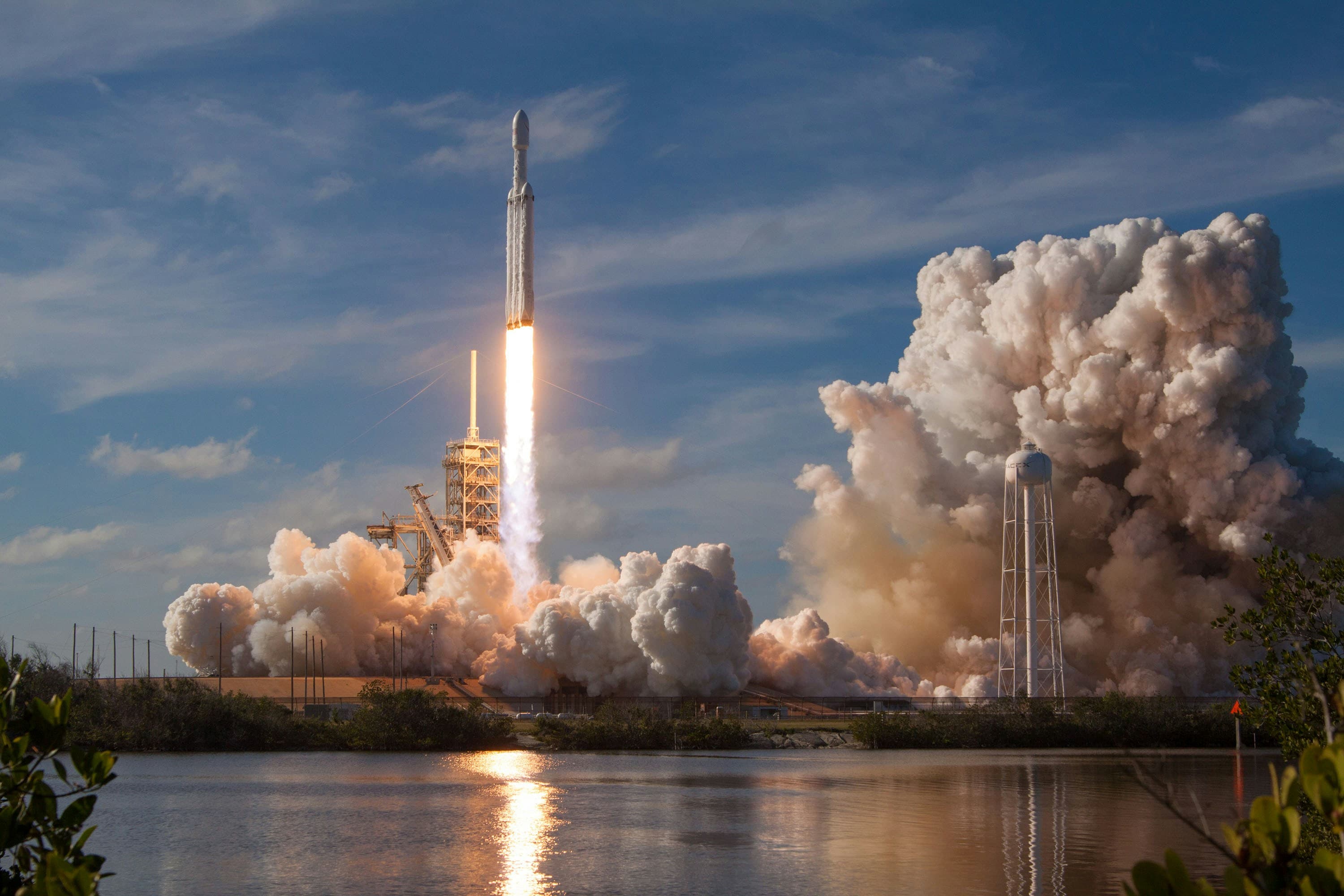
Because xAI already owns X — formerly Twitter — the merger closes a loop that brings social media into the SpaceX corporate structure. The combined company now controls: Starlink's satellite internet constellation spanning tens of thousands of satellites, direct-to-mobile communications infrastructure currently being integrated into standard smartphones without additional hardware, the Grok AI assistant and its underlying model development pipeline, X's social platform and its global user data, and the rocket and launch infrastructure that underpins all of it.
No other private company in history has controlled assets across those verticals simultaneously. The closest analogues are conglomerates like Alphabet, which spans search, cloud, autonomous vehicles, and hardware — but Alphabet doesn't own rockets or a satellite constellation. The scope of what SpaceX-xAI controls as a single entity is genuinely unprecedented in the private sector.
The IPO Backdrop and Why Timing Matters
This merger isn't happening in a vacuum. SpaceX has a planned IPO targeted for mid-2026 that could raise up to $50 billion. The acquisition of xAI ahead of that offering is almost certainly strategic — it substantially expands the narrative SpaceX can present to public market investors. A rocket company is a compelling story. A rocket company that also owns an AI lab, a social platform, a satellite constellation, and plans for orbital compute infrastructure is a fundamentally different pitch.
The all-stock structure of the deal is also worth noting in that context. By using SpaceX equity rather than cash, Musk avoids depleting SpaceX's capital reserves ahead of a public offering while still completing the acquisition. xAI shareholders get upside on the IPO; SpaceX preserves its balance sheet. It's structured cleanly, assuming SpaceX's public offering performs as expected.
The Tesla Question Nobody Has Answered Yet
Analysts have been quick to flag that a Tesla merger — long speculated as a possibility — remains on the table. Tesla's autonomous driving program, its energy storage business, and its manufacturing scale would slot into the SpaceX-xAI structure in ways that are strategically coherent. Autonomous vehicles feed into AI training data. Energy storage connects to the orbital solar power narrative. Manufacturing capability provides supply chain leverage for hardware ambitions.
For now, a Tesla merger remains speculative. Tesla is a public company with its own board, shareholders, and regulatory obligations — a merger would require a level of process and scrutiny that the SpaceX-xAI all-stock deal, conducted entirely between private entities, didn't face. But the strategic logic exists, and Musk has never been shy about pursuing structural consolidations when he believes the long-term case is strong. The question is whether Tesla shareholders would agree — and what regulators would make of a single private-to-public entity controlling that breadth of critical infrastructure.
AI Summary
Generate a summary with AI


