NASA IXPE reveals new details in supernova remnant RCW 86
NASA’s IXPE telescope has taken a closer look at the supernova remnant RCW 86, offering a fresh view of how a massive star’s explosion reshapes its surroundings. This object, believed to be linked to a stellar event recorded by observers nearly two thousand years ago, is one of the youngest remnants visible from Earth. The latest data goes beyond standard imaging by measuring the polarization of X-rays, giving scientists a clearer sense of how matter and energy behave in these extreme conditions.
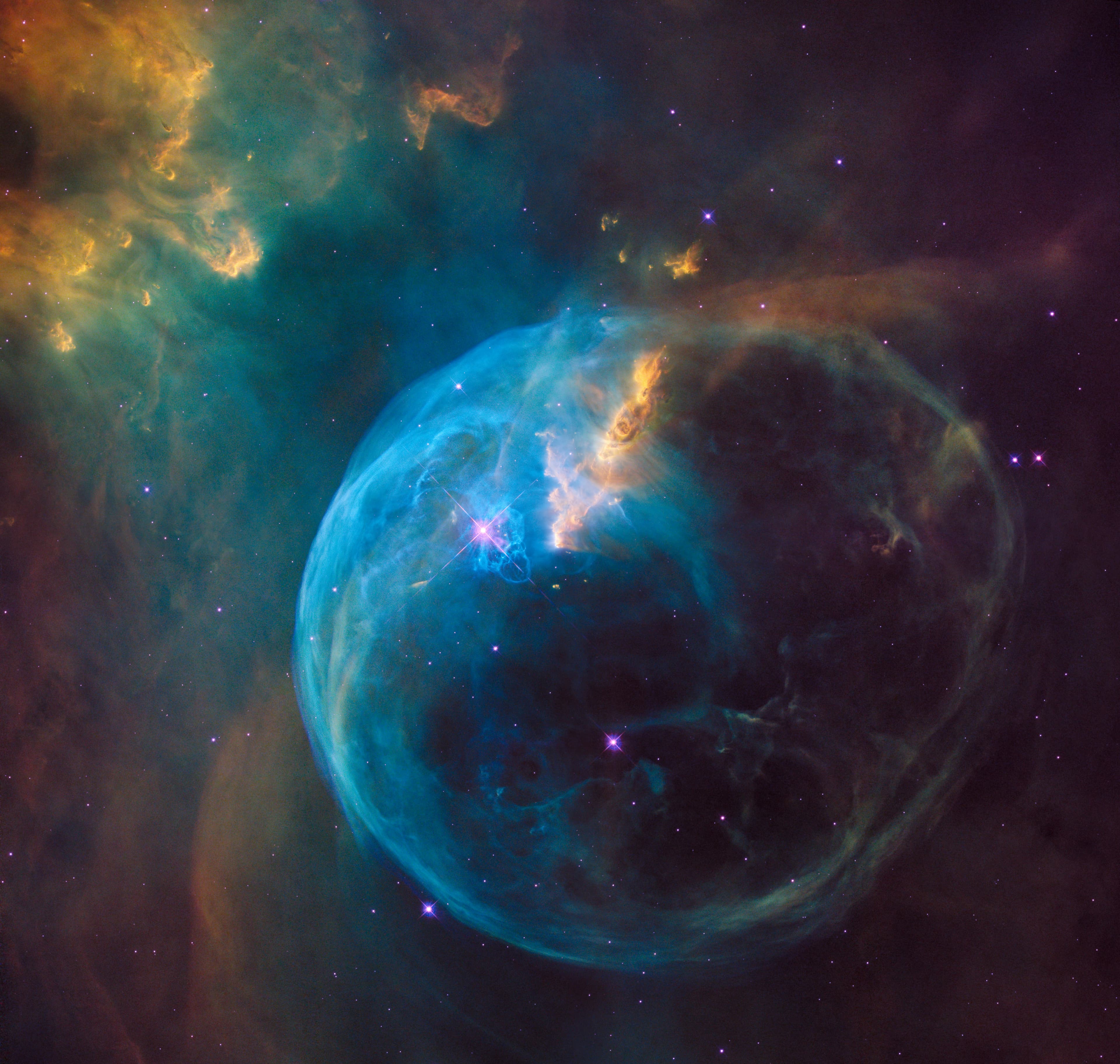
RCW 86 has been studied for years, but IXPE adds a different layer of detail. Instead of only mapping brightness, it tracks the orientation of X-ray light waves. This reveals how magnetic fields are arranged inside the expanding cloud of debris. Those fields play a direct role in shaping the remnant and controlling how particles move through it.
how IXPE changes the picture
Traditional X-ray telescopes show where high-energy emissions come from, but they do not explain how those emissions are produced. IXPE fills that gap. By measuring polarization, it helps scientists determine whether the X-rays are generated by fast-moving electrons spiraling along magnetic field lines or by other processes.
In RCW 86, the data points to strong and uneven magnetic fields across different regions. Some areas show more ordered patterns, while others appear turbulent. This uneven structure suggests that the shock waves from the original explosion continue to interact with surrounding material in complex ways. It also helps explain why certain parts of the remnant shine brighter in X-rays than others.
what this tells us about supernova explosions
Supernova remnants act like natural laboratories for studying high-energy physics. The debris expands outward at high speed, carrying magnetic fields and charged particles with it. Observations from IXPE show that these magnetic fields can become amplified after the explosion, which in turn accelerates particles to near-light speeds.
This process is linked to the origin of cosmic rays, which constantly reach Earth from space. By studying RCW 86 in detail, scientists can test models of how these particles gain energy. The new measurements provide real data to compare against theoretical predictions, reducing uncertainty about how these systems evolve over time.
a closer look at a familiar remnant
RCW 86 has long been visible in multiple wavelengths, including radio and optical light. Each method reveals a different part of the story. IXPE adds another perspective by focusing on X-ray polarization, which had not been mapped in this level of detail before. The result is a more complete picture of how energy flows through the remnant.
As observations continue, scientists plan to compare RCW 86 with other supernova remnants. Each one has its own structure and history, but patterns may emerge when enough data is collected. For now, the IXPE findings offer a deeper look at one of the nearest examples of a relatively recent stellar explosion.
AI Summary
Generate a summary with AI

