NASA ESCAPADE mission to study how solar wind stripped away Mars's atmosphere
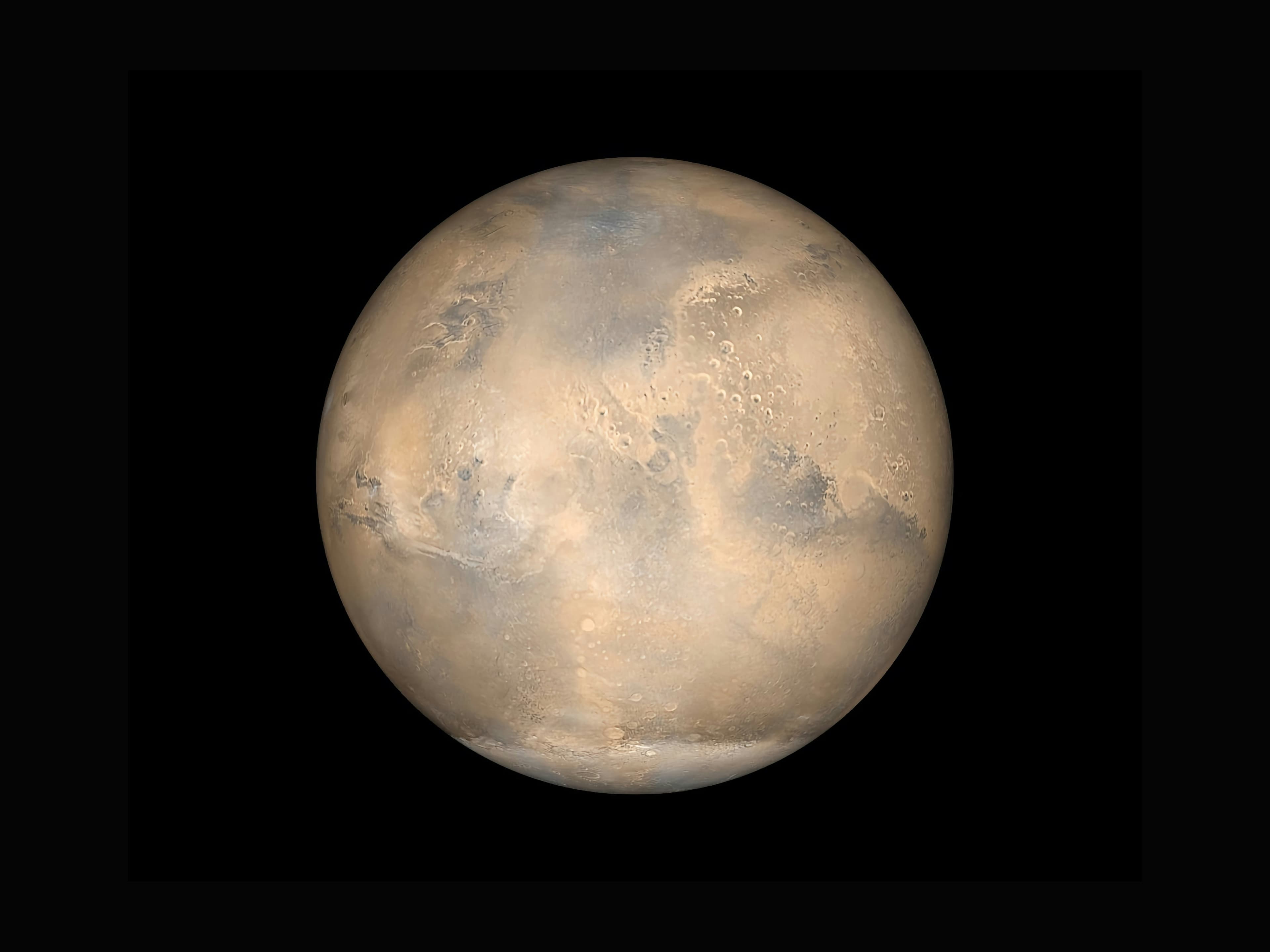
NASA's ESCAPADE mission, a pair of small spacecraft built to fly in formation around Mars, is preparing to study one of the more consequential processes in planetary science: how the Sun's solar wind continuously strips gas away from Mars's thin atmosphere. The mission targets a question that matters beyond Mars itself. Understanding how a planet loses its atmosphere to solar radiation directly informs how scientists assess which worlds in other solar systems might be capable of supporting life.
What ESCAPADE is and how it works
ESCAPADE stands for Escape and Plasma Acceleration and Dynamics Explorers. The mission uses two spacecraft rather than one because the atmospheric escape process at Mars cannot be fully characterized from a single vantage point. Solar wind interacts with Mars's magnetic field and ionosphere simultaneously across different spatial scales. One spacecraft measures the solar wind conditions upstream from Mars while the second measures the resulting atmospheric loss in the planet's magnetotail downstream. Together they provide a before-and-after picture of the same solar event in real time, which single-spacecraft missions cannot achieve.
The spacecraft are small by NASA standards, each roughly the size of a mini-fridge. They are part of NASA's Small Innovative Missions for Planetary Exploration program, which was designed to get science instruments to planetary targets at lower cost than traditional large missions. ESCAPADE was selected in 2019 and has been in development since. The planned orbital configuration around Mars will allow both spacecraft to capture data across a full range of solar activity conditions over the mission's primary science phase.
How Mars lost its atmosphere and why that question still matters
Mars was not always the way it appears today. Geological evidence from NASA's Curiosity rover and Mars Reconnaissance Orbiter strongly indicates that Mars had liquid water on its surface roughly 3 to 3.5 billion years ago. Ancient river channels, lake beds, and minerals that only form in the presence of water have been found across multiple regions of the Martian surface. For that water to have been liquid, Mars must have had a thick enough atmosphere to maintain surface temperatures above freezing.
Earth retained its atmosphere because it has a global magnetic field generated by its molten iron core, which deflects most of the solar wind before it can interact with the upper atmosphere. Mars lost its global magnetic field approximately 4 billion years ago when its core cooled and solidified. Without that shield, the solar wind began directly interacting with the Martian ionosphere, and over billions of years, that interaction gradually removed the atmosphere. ESCAPADE will measure exactly how fast that process is happening today and which mechanisms are most responsible.
What previous missions found and what ESCAPADE adds
NASA's MAVEN mission, which entered Mars orbit in 2014, was the first spacecraft specifically designed to study Martian atmospheric loss. MAVEN's measurements showed that Mars loses approximately 100 grams of atmosphere per second to solar wind erosion during quiet solar conditions, and that loss rate spikes dramatically during solar storms. MAVEN estimated that Mars has lost roughly 75 percent of its original atmospheric argon over its history, which serves as a proxy for total atmospheric loss.
ESCAPADE's two-spacecraft design lets scientists do something MAVEN could not: capture simultaneous upstream and downstream measurements during the same solar event. MAVEN could measure the atmospheric loss environment, but it could not simultaneously observe what the incoming solar wind looked like before it hit Mars. ESCAPADE closes that observational gap. The University of California Berkeley Space Sciences Laboratory, which leads the ESCAPADE science team, expects the simultaneous data streams to improve atmospheric loss rate estimates by reducing the uncertainty that comes from inferring upstream solar wind conditions from models rather than direct measurement.
What the data will tell us about other planets
Atmospheric escape driven by stellar radiation is not unique to Mars. It is a process affecting every rocky planet in every star system. When astronomers assess whether an exoplanet in a habitable zone could sustain liquid water, one of the variables is whether the planet's magnetic field and atmospheric density are sufficient to resist the host star's radiation pressure. Mars is the only planet other than Earth where scientists can send instruments to directly measure this process at close range.
The ESCAPADE science team plans to correlate its Mars atmospheric loss measurements with data from the James Webb Space Telescope's observations of rocky exoplanets in other systems. JWST has already detected atmospheric signatures on several exoplanets orbiting red dwarf stars, which are known to produce more intense and frequent stellar wind events than the Sun. The ESCAPADE data will give exoplanet atmosphere modelers a calibrated real-world dataset to test against. The mission's primary science phase at Mars is scheduled to begin in 2027 after a planned 2025 launch and transit period.
AI Summary
Generate a summary with AI

