Foxconn Revenue Climbs 21.6% in Early 2026, Fueled by Surging Demand for Nvidia AI Servers
Most people still think of Foxconn as the company that assembles iPhones. That mental model is increasingly out of date. Hon Hai Precision Industry reported combined revenue for January and February 2026 that surged 21.6% year-over-year, and the growth had almost nothing to do with consumer electronics. It came from AI infrastructure — specifically, the assembly and supply chain work behind Nvidia-based server systems that hyperscalers and cloud providers simply cannot get enough of.
The numbers translate to approximately NT$1.35 trillion across those two months, which works out to roughly $42 billion USD. That is not a rounding error. It puts Foxconn's AI server business on a trajectory that, if sustained, would make it one of the most consequential companies in the global AI buildout — not as an innovator or model developer, but as the manufacturing backbone that turns Nvidia's chip designs into functioning rack-mounted systems.
Why This Number Matters Beyond the Headline
Revenue growth at a contract manufacturer is a useful proxy for demand elsewhere in the system. Foxconn does not drive demand — it responds to it. When its AI server segment grows this fast, it means the companies ordering those servers, primarily Amazon, Microsoft, Google, Meta, and a growing list of sovereign AI projects, are accelerating their infrastructure spending rather than pulling back. There has been persistent speculation in financial markets about whether the AI capex cycle has peaked. Foxconn's early 2026 numbers suggest it has not.
The company's cloud and networking product segment, which houses most of its AI server work, now represents a larger share of total revenue than its consumer smart products division — the segment that includes iPhone manufacturing. That crossover happened faster than most analysts projected when Foxconn began its AI infrastructure pivot in earnest around 2023. Chairman Young Liu has been explicit about the strategic intent: reduce dependence on any single product category, and ride the structural growth in AI compute instead of cyclical consumer hardware refresh cycles.
The Nvidia Dependency — and Why It Is Both a Strength and a Risk
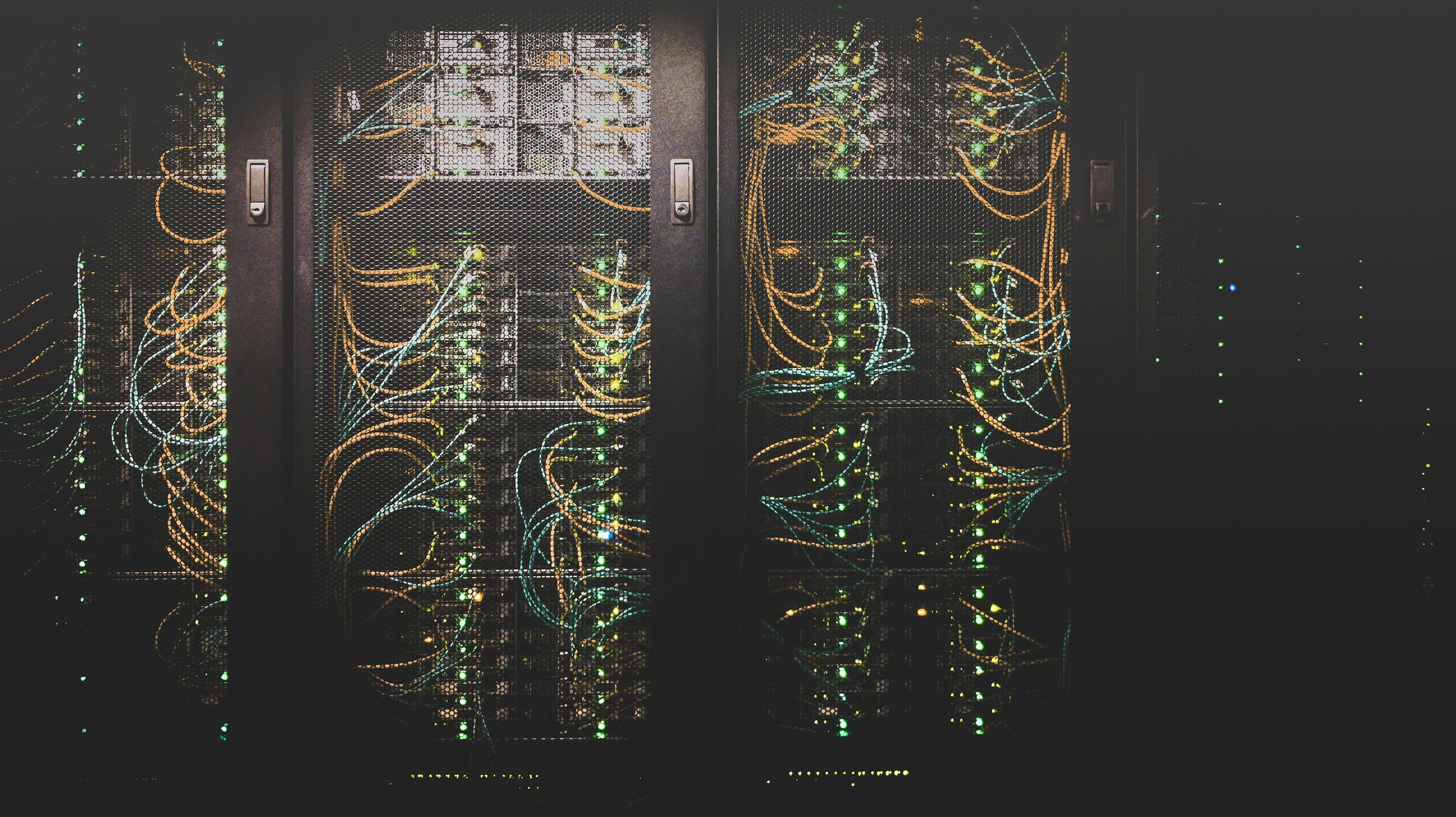
Foxconn is not the only company assembling Nvidia-based servers. Quanta, Wistron, and Inventec all compete in the same space. But Foxconn has positioned itself as one of Nvidia's most capable and scaled partners for GB200 NVL72 rack systems — the dense, liquid-cooled configurations that represent the current cutting edge of AI training infrastructure. These are not simple builds. The thermal management alone requires precision that separates capable assemblers from truly competitive ones.
The dependency on Nvidia is real, and it cuts both ways. As long as Nvidia dominates AI accelerator sales — which it does, with roughly 80% market share in data center GPUs — Foxconn's server business benefits directly from that dominance. But if AMD's MI300 series gains more traction, or if hyperscalers accelerate their shift to custom silicon like Google's TPUs and Amazon's Trainium, the mix of what Foxconn builds could shift. The company has been quietly expanding its relationships with alternative chip vendors, but Nvidia is by far the primary engine of its current AI server revenue.
There is also the geopolitical dimension. Foxconn has spent the past several years diversifying its manufacturing footprint away from China, building out facilities in India, Vietnam, and Mexico. For AI server production specifically, the company has been expanding its US and Mexico capacity to serve American hyperscalers who increasingly prefer supply chains with reduced China exposure. That geographic diversification is partly a hedge against tariff risk and partly a direct response to customer preference — and it positions Foxconn well for the kind of reshoring pressures that US policy has been generating.
What the Supply Chain Surge Says About the Broader AI Buildout
When analysts try to gauge the pace of AI infrastructure investment, they often look at Nvidia's quarterly earnings, hyperscaler capex guidance, or data center construction announcements. Foxconn's revenue numbers offer a different and arguably more grounded signal: actual hardware going out the door. A chip shortage or a supply chain bottleneck would show up in Foxconn's numbers before it showed up in Nvidia's revenue, because Nvidia books revenue when chips ship, while Foxconn books revenue when complete systems ship. Both are growing.
The January and February figures are also notable because these are historically softer months in consumer electronics, when post-holiday demand subsides. The AI server business does not follow the same seasonal pattern — infrastructure procurement decisions are driven by capacity planning cycles and budget approvals, not holiday shopping. The fact that growth accelerated in these specific months, rather than flattening seasonally, suggests the underlying demand is structural and not simply a catch-up from delayed 2025 orders.
Foxconn's Own AI Ambitions Are Getting Serious
Foxconn is not content to remain a pure contract manufacturer indefinitely. The company has been investing in its own AI and robotics capabilities, partly to improve the efficiency of its own factories — which employ hundreds of thousands of workers globally — and partly to position itself as a technology company rather than just a manufacturing services provider. Its NVIDIA-powered AI factory initiative, which it announced with considerable fanfare, is both a real operational program and a branding statement about where Foxconn sees itself in five years.
The electric vehicle ambitions are also still alive, if quieter than they were a year ago. Foxconn's MIH open EV platform has attracted a handful of partners, and the company continues to position itself as a potential assembler-of-record for automakers who want to outsource vehicle production the way smartphone brands outsource device manufacturing. Whether that analogy holds in practice is still an open question, but it reflects the same strategic logic: become the infrastructure layer, not the brand.
Looking Ahead: Can the Momentum Hold?
Foxconn's management has guided for continued strong performance through at least the first half of 2026, citing a backlog of AI server orders that extends well into the second quarter. The company expects its cloud and networking segment to remain the primary growth driver, with consumer electronics gradually recovering as Apple's iPhone cycle progresses and demand from emerging markets strengthens.
The risks are real but manageable in the near term. A sharp slowdown in hyperscaler spending, a major supply disruption at TSMC affecting Nvidia's chip output, or a meaningful geopolitical escalation affecting Taiwan-based operations could all create headwinds. None of those scenarios look imminent. For now, the AI server business is growing fast enough to carry the whole company — and Foxconn is making sure it has the capacity to keep up with the orders.
The broader takeaway from these numbers is simple: the companies building the physical infrastructure of the AI era are doing very well, and Foxconn is near the top of that list. The spotlight in AI tends to fall on model developers and chip designers. The factories that turn those designs into the actual hardware running the world's AI workloads are just as essential — and right now, they are extraordinarily busy.
AI Summary
Generate a summary with AI
