Vertical Farming Giant Bowery Opens World's Largest Automated Facility
Bowery Farming has opened what it calls the world's largest automated indoor farm in Pennsylvania, a facility capable of producing 20 million pounds of leafy greens per year while using 95 percent less water than conventional field agriculture. The scale of the operation is hard to visualize — this is not a startup greenhouse experiment or a pilot project. It is a full industrial-scale production facility, and it represents a genuine inflection point for an industry that has spent the better part of a decade trying to prove it can compete with outdoor farming on volume.
Vertical farming has had a complicated few years. Several high-profile companies in the space burned through capital at unsustainable rates and either shut down or dramatically scaled back. AeroFarms filed for bankruptcy twice. AppHarvest was acquired out of distress. The narrative around controlled-environment agriculture soured somewhat among investors who had expected faster paths to profitability. Bowery opening a facility of this magnitude — and apparently doing so with the operational infrastructure to run it — pushes back against that pessimism in a concrete way.
Inside the Facility: Automation at Every Level
The Pennsylvania farm is built around Bowery's proprietary operating system, which the company calls BoweryOS. The platform integrates computer vision, robotics, and machine learning to monitor and manage every aspect of the growing environment — light spectrum and intensity, nutrient delivery, humidity, CO2 levels, and harvest timing. Cameras scan crops continuously, and algorithms flag any deviation from optimal growth parameters before it becomes a problem visible to the human eye.
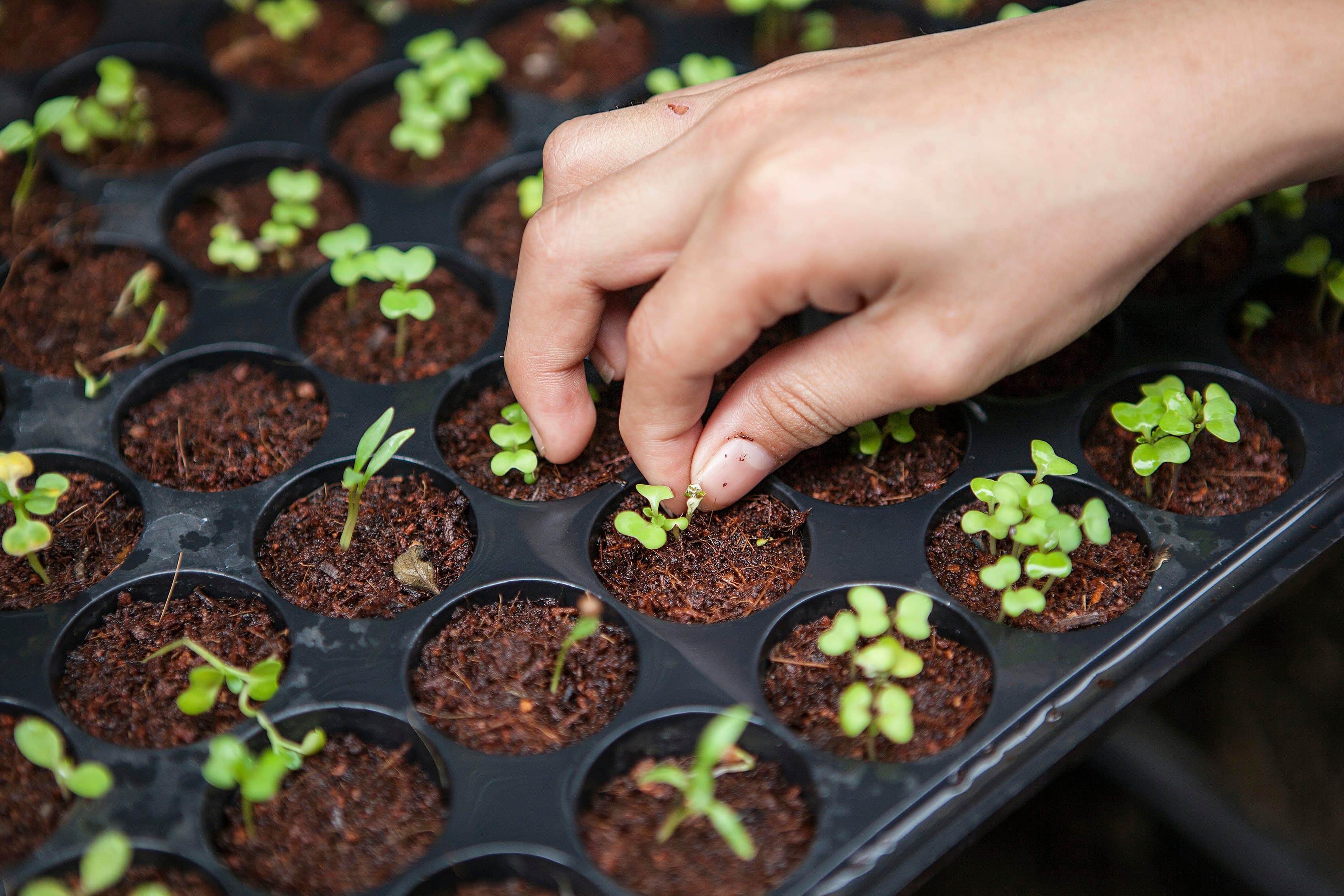
Robotic systems handle seeding, transplanting, and harvesting with minimal human intervention on the production floor. The labor that remains is largely technical — engineers, data scientists, and systems operators rather than the seasonal field workers that conventional lettuce and herb farms depend on. That shift has implications for labor economics, for consistency of output, and for the facility's ability to operate year-round regardless of what the weather is doing outside.
The Water Efficiency Claim and Why It Matters
The 95 percent water reduction figure cited by Bowery is not unusual for well-designed hydroponic or aeroponic systems — it reflects how closed-loop water circulation works in controlled environments versus open-field irrigation, where significant water is lost to evaporation, runoff, and soil absorption. In a vertical farm, water is delivered directly to root zones and recaptured, filtered, and recirculated. Very little leaves the system.
That matters most in water-stressed agricultural regions, but it is also increasingly relevant in the American mid-Atlantic and Northeast, where drought conditions have become more frequent and where aquifer depletion is a growing concern for conventional vegetable growers. Pennsylvania may not seem like an obvious location for water-conservation agriculture, but the facility's proximity to major population centers on the East Coast is the actual strategic rationale — shorter supply chains, less refrigerated transport, and fresher product at retail.
Location Strategy and Distribution Logic
Bowery has consistently built its farms near dense urban markets rather than in agricultural belts. Its earlier facilities in New Jersey and Maryland serve the New York City and Washington DC metro areas. The Pennsylvania facility extends that footprint further into one of the most densely populated corridors in the country. The company's distribution model targets grocery retailers and food service operators who can receive product harvested within 24 to 48 hours — a freshness proposition that field-grown California lettuce, traveling three to five days by refrigerated truck, cannot match.
Walmart, Giant Food, and Whole Foods have all stocked Bowery products in previous years. At 20 million pounds of annual output from a single facility, the Pennsylvania farm will need retail commitments at a scale that requires Bowery to either deepen existing relationships significantly or open new distribution channels. The company has not disclosed its full retail partner list for this facility, but the production numbers only work economically if offtake agreements are largely in place at opening.
The Energy Question That Does Not Go Away
Vertical farming's persistent weak point is electricity consumption. Growing crops under artificial LED lighting around the clock requires enormous amounts of power, and in markets where the grid runs primarily on fossil fuels, the carbon footprint of indoor-grown produce can exceed that of field-grown product shipped from warmer climates. It is the part of the vertical farming sustainability argument that honest operators acknowledge and critics correctly flag.
Bowery has said its Pennsylvania facility is powered by renewable energy, though the specifics — whether that is direct generation, renewable energy certificates, or a power purchase agreement — affect how meaningful that claim is in practice. LED efficiency has improved substantially over the past decade, and newer grow light systems draw considerably less power per unit of photosynthetically active radiation than earlier generations. But the energy intensity of vertical farming remains a real operational cost and a genuine environmental consideration that the industry has not fully resolved.
What This Opening Signals for the Broader Industry
The companies that survived the vertical farming shakeout of the past two years did so by focusing on unit economics, reducing capital intensity per square foot of growing space, and concentrating on crops where the freshness and consistency premium is high enough to support indoor production costs. Leafy greens and herbs fit that profile. Commodity crops like wheat or corn do not, and the companies that tried to grow anything other than high-value produce indoors largely failed.
Bowery opening the world's largest automated vertical farm is a statement that the category has a viable future — at least for the right crops, in the right locations, with the right technology stack. Whether that future is as transformative as the industry's early boosters claimed, or more narrowly defined than the original pitch suggested, is still being worked out. This facility is a significant data point either way.
AI Summary
Generate a summary with AI