Saudi Arabia’s Red Sea oil route to India: how a 1981 pipeline just became headline news
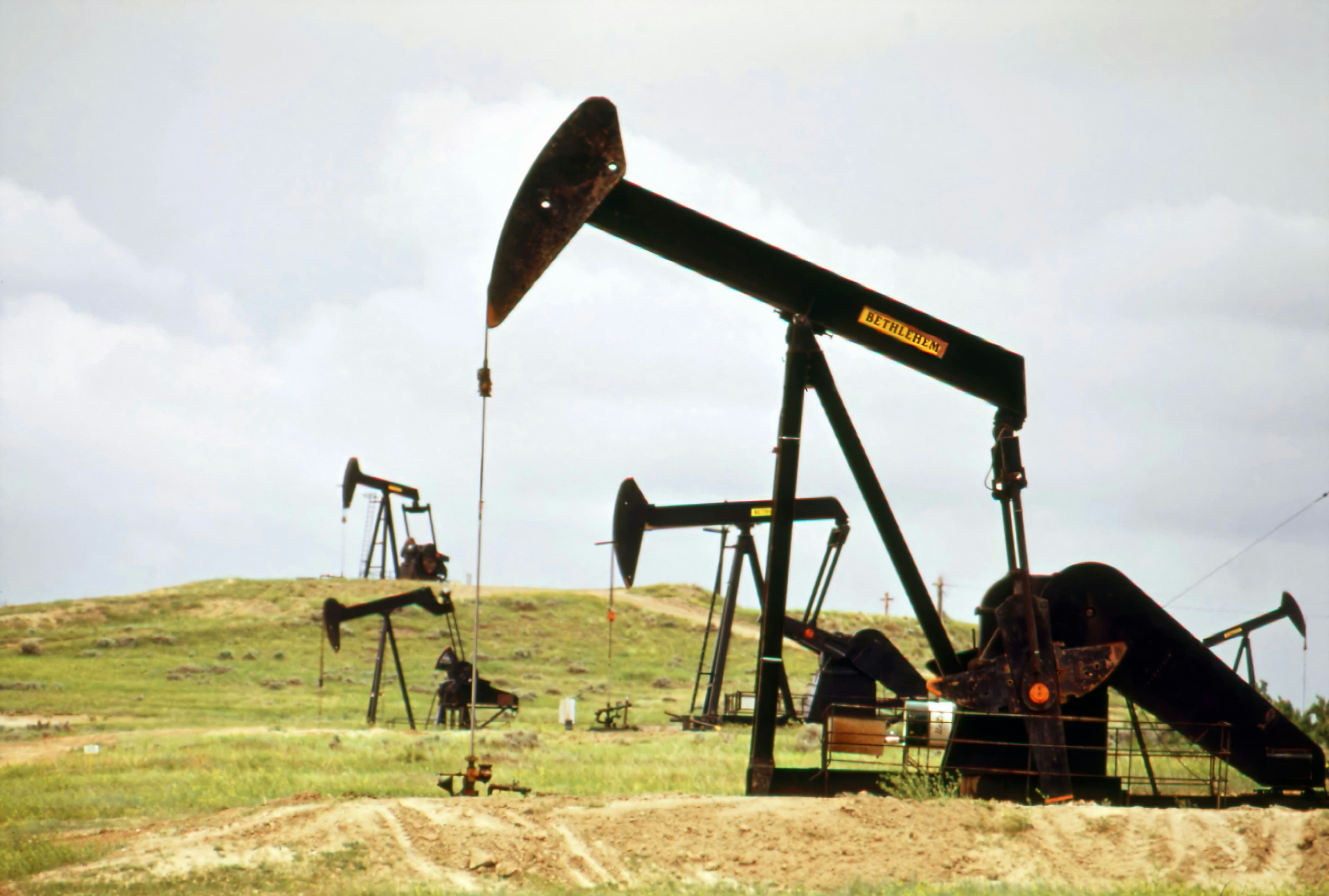
When trouble flares up around the Strait of Hormuz, the entire global oil trade feels the heat. In this context, Saudi Arabia’s decision to send 16 million barrels of crude to India through the Red Sea is not a side note, it is a serious attempt to keep supply moving while one of the world’s most sensitive chokepoints stays under pressure. The move tells you how quickly West Asia’s geography, old infrastructure and today’s geopolitics can collide to reshape tanker routes and price risks.
Why the Strait of Hormuz scares oil markets
At the heart of the story is the Strait of Hormuz, a narrow waterway between Iran and the Arabian Peninsula through which roughly a fifth of the world’s oil supply usually passes. On one side sits Iran, using control over this route as a pressure tool in its standoff with the United States and Israel. On the other side are Gulf producers such as Saudi Arabia, the UAE, Qatar, Bahrain and Oman, whose tankers depend on this sea lane to reach buyers in Asia and beyond.
The current crisis in West Asia has already pushed crude prices above 100 dollars a barrel for some benchmarks, a sharp jump from the 60–70 dollar band that felt almost normal just months ago. Every time tension spikes, the threat is the same: if tankers cannot pass safely through Hormuz, cargoes get delayed or diverted, insurance costs jump and importers like India have to absorb higher freight and fuel prices. That is the backdrop against which Riyadh dusted off an older idea.
Inside Saudi Arabia’s east–west pipeline bet
On the map, Saudi Arabia touches two major bodies of water. Its eastern coastline opens into the Persian Gulf, close to the Strait of Hormuz, while its western side faces the Red Sea. Long before this latest crisis, the country quietly laid an oil pipeline across its territory to connect these two coasts. Built in 1981 during the Iran–Iraq war, the line runs roughly 1,200 kilometres from the Ras Tanura refinery area in the east to the Yanbu export terminal on the Red Sea.
This infrastructure, often called the east–west pipeline, was originally meant as an insurance policy. If shipping through Hormuz became risky, Saudi crude could still reach global markets through Yanbu. For years, though, it carried only a fraction of its capacity, moving about 2 million barrels per day while the main flows still went out through the Gulf. That underused backup route has now been pushed back into the spotlight as Riyadh ramps up flows and loads tankers from the Red Sea instead.
Recent tracking data shows four large crude carriers, carrying a combined 6 million barrels, already using this Red Sea path towards India, with capacity to scale that up much more if needed. Estimates for the pipeline’s maximum throughput range between 7 and 10 million barrels per day, so Saudi Arabia is stress‑testing an asset that was designed for emergencies and is now facing close to five times its earlier routine load.
What this means for India’s energy security
For India, which imports the bulk of its crude, any alternate route that keeps West Asian supplies flowing matters immediately. Shipments loaded at Yanbu avoid sailing through the Strait of Hormuz altogether, cutting exposure to blockades, missile threats or sudden political moves in that narrow passage. The cargoes still have to pass through another choke point, the Bab el‑Mandeb strait at the mouth of the Red Sea, and then cross the Arabian Sea to reach Indian ports, but the risk profile is more spread out instead of being concentrated at one heavily contested spot.
There is a second layer to India’s position. In recent years, New Delhi has leaned heavily on discounted Russian oil that moves by sea routes past the Red Sea towards the Indian Ocean. If both Hormuz and Red Sea approaches were to become unsafe at the same time, the combined shock would hit Russian cargoes and Gulf cargoes together. That is why even a partial rerouting by Saudi Arabia grabs attention in New Delhi: it shows there is still some room to reconfigure flows before the last remaining passages get crowded or contested.
The Bab el‑Mandeb factor and Houthi risk
Shifting tankers from Hormuz to the Red Sea does not magically remove all danger. At the southern end of the Red Sea lies the Bab el‑Mandeb strait, a narrow channel between Yemen on the Arabian side and Djibouti and Eritrea on the African side. On the Yemeni coast, Houthi fighters control large stretches of territory and have already shown they can target ships with missiles, drones and small explosive boats.
So far, their activity has been selective, but the capability is proven. In earlier rounds of tension, attacks in and around Bab el‑Mandeb forced shipping firms to reroute vessels around the Cape of Good Hope at Africa’s southern tip, adding thousands of kilometres to journeys and pushing up costs. If that happens again while the Hormuz route is also unstable, the price impact would be far sharper than what the market has seen in this latest spike.
Old infrastructure, new stress points
The Saudi pipeline itself is not free from risk. It was laid more than four decades ago, and while it has been maintained and upgraded over time, pushing it close to its upper capacity for long stretches creates real engineering pressure. A line that was moving 2 million barrels a day for years is now being asked to handle several times that volume. Leaks, corrosion‑related failures or valve issues along a 1,200‑kilometre route would not only disrupt exports but also trigger environmental and political headaches.
There is also the security question. Iran has already shown that it can hit Saudi oil infrastructure with drones and missiles, including attacks on facilities around Ras Tanura and other Persian Gulf installations. If Tehran chose to widen the confrontation, Yanbu and sections of the east–west line would be obvious targets. Shifting crude from one coast to another reduces dependence on Hormuz but does not remove Saudi Arabia from Iran’s strike range.
Other bypasses: UAE and regional pipelines
Saudi Arabia is not the only Gulf producer with a backup plan. The United Arab Emirates has its own pipeline that links fields near Habshan to the port of Fujairah on the Gulf of Oman. This line allows Emirati crude to be exported without tankers passing directly through the Strait of Hormuz, giving Abu Dhabi a degree of flexibility when the main shipping lane feels too risky. Its capacity, however, is around 2 million barrels per day, far smaller than the volumes that normally move through Hormuz.
Qatar, for its part, relies heavily on gas pipelines and LNG shipping spread across the Gulf and beyond, and some older ideas for moving Iraqi oil across the region remain stalled. In practice, this means the Saudi east–west line and the UAE Fujairah route are the two main practical bypasses on the table right now. They can ease the shock but cannot fully replace the 20 million barrels per day that Hormuz usually carries when the region is calm.
Where the United States and Iran fit in
Behind the pipeline maps sits the larger contest between the United States, Iran and their respective partners. Washington’s military actions and sanctions policy have fed Tehran’s incentive to use Hormuz and allied groups like the Houthis and Hezbollah as levers. Every time Iran signals that it could squeeze these routes, Washington responds with naval deployments and diplomatic pressure, while allies quietly look for ways to keep their economies fuelled even if the shooting intensifies.
In that tug of war, Saudi Arabia’s decision to lean harder on a 1981 pipeline is a practical step rather than a grand statement. It does not end the Hormuz problem, it does not solve the Yemen conflict and it does not lock in India’s energy security. What it does do is buy time and create breathing space in a moment when one chokepoint feels too exposed for comfort.
How tanker routes could change next
If tensions moderate, some of these flows may quietly slip back through Hormuz because it is still the shortest, cheapest path for large volumes of Gulf crude. If they escalate, expect more tankers to originate from Yanbu, Fujairah and other alternative ports, even if that raises costs in the short term. For importers like India, Japan and South Korea, the next few months will be a test of how well they can juggle supplies from Russia, the Gulf and other producers while freight rates, insurance and political risk all move at once.
The forgotten pipeline that once looked like a Cold War‑era backup has suddenly turned into a visible part of that juggling act. It links old engineering decisions, present‑day missile ranges and the price on the digital signboard at your nearest fuel pump. That is why a line buried under Saudi sand is now central to conversations about India’s oil bill and the next twist in West Asia’s conflicts.
AI Summary
Generate a summary with AI