Oregon Health Scientists Develop New Molecule That Could Treat Triple-Negative Breast Cancer
Triple-negative breast cancer is the subtype that oncologists find hardest to treat and patients find hardest to survive. It accounts for roughly 15 percent of all breast cancer diagnoses but is responsible for a disproportionate share of breast cancer deaths, partly because of how aggressively it spreads and partly because it lacks the molecular targets that have made other breast cancer types increasingly treatable. Researchers at Oregon Health and Science University have now developed a novel molecule that shows early promise in disrupting the growth pathways specific to this subtype — a finding that, if it holds through subsequent trials, could meaningfully expand the treatment toolkit for a disease that currently has limited options.
Why Triple-Negative Breast Cancer Is So Difficult to Treat
The name itself explains the core problem. Triple-negative breast cancer tests negative for estrogen receptors, progesterone receptors, and HER2 protein overexpression — the three molecular markers that the most effective targeted therapies for breast cancer are designed to attack. Hormone therapies that have transformed outcomes for estrogen-receptor-positive patients don't work here. HER2-targeted drugs like trastuzumab are irrelevant. What's left for triple-negative patients is primarily chemotherapy, which is broadly cytotoxic and carries significant side effects, combined with a newer class of immunotherapy drugs that help some patients but not all.
The disease also has a higher rate of early recurrence compared to other breast cancer subtypes, and when it does recur, it tends to do so in distant organs — the lungs, brain, and liver — where it is harder to treat and carries a worse prognosis. Finding molecular targets specific to triple-negative tumors has been a long-standing priority in oncology research, and every credible candidate that emerges from laboratory work is scrutinized closely because the unmet need is so large.
What the OHSU Molecule Does
The OHSU research team developed a compound that targets specific pathways involved in cancer cell growth and survival that are active in triple-negative tumors. While the precise molecular target hasn't been exhaustively detailed in early coverage of the announcement, the approach fits within a broader research trend of identifying signaling pathways that triple-negative cancer cells depend on for proliferation — pathways that normal cells either don't use in the same way or can tolerate disrupting. That selectivity is crucial, because it's what separates a targeted therapy from a blunt instrument like conventional chemotherapy.
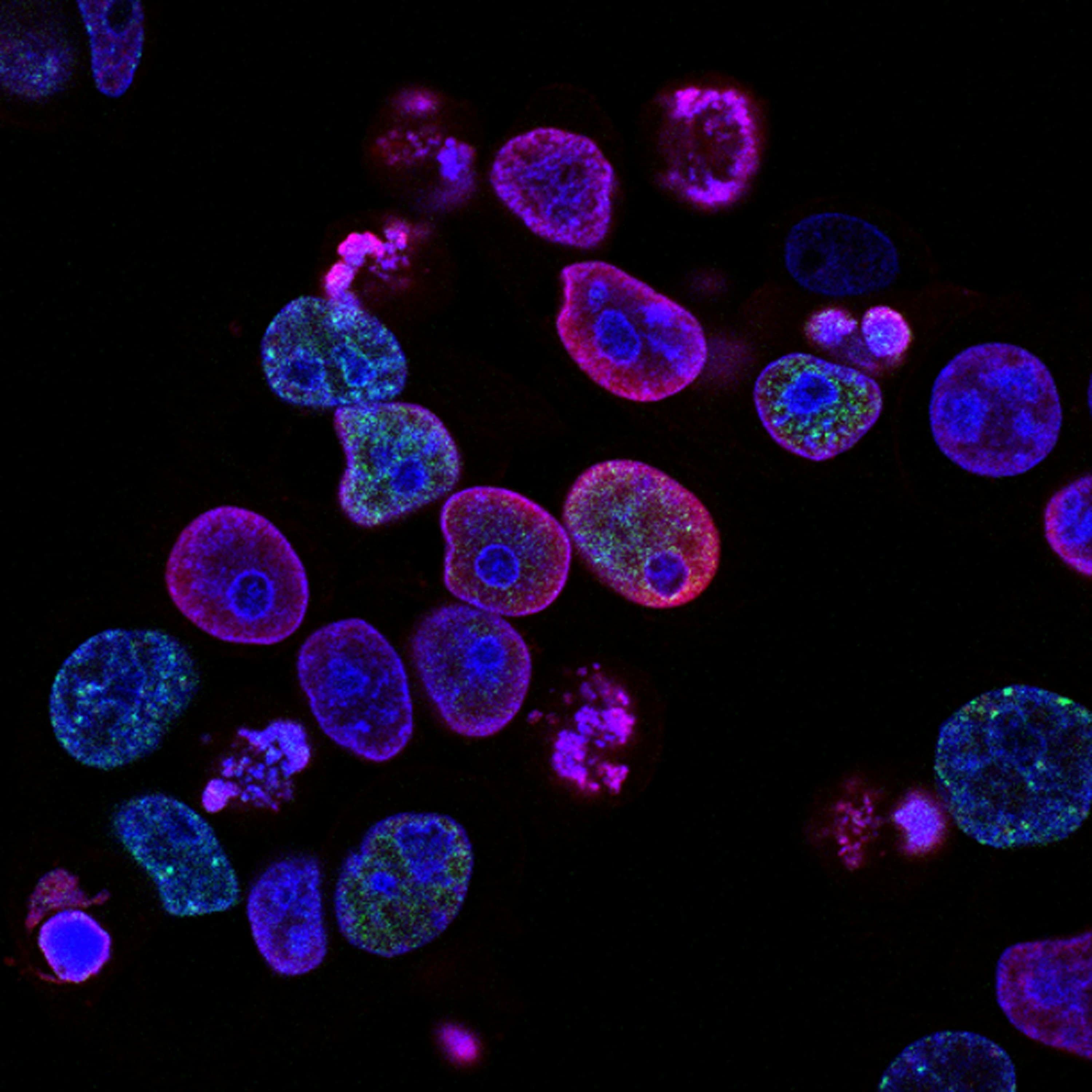
In laboratory testing, the molecule demonstrated activity against triple-negative breast cancer cells in ways that suggest it could be developed into a therapeutic compound. The early results are promising enough that the research team is advancing it toward the next stages of preclinical development, which will involve more extensive testing in cancer models before any consideration of human trials. The path from molecule to medicine is long, but having a viable candidate is the essential first step.
OHSU's Position in Cancer Drug Discovery
Oregon Health and Science University has built a significant research infrastructure around oncology, including dedicated cancer drug discovery programs that combine basic science with translational research — the work of moving laboratory findings toward clinical application. The institution's Knight Cancer Institute has been a particular focus of investment and talent recruitment in this space, and its work on breast cancer subtypes has produced several findings that have entered the broader research pipeline over the years.
The academic medical center model that OHSU represents — where research, clinical care, and drug development infrastructure exist in close proximity — has proven productive for this kind of work. Researchers can move between cell-line data, patient tissue samples, and clinical observations in ways that purely industrial drug discovery programs sometimes can't replicate. That proximity to clinical reality tends to keep research questions grounded in what actually matters to patients.
The Road from Discovery to Patient Treatment
It's worth being clear about where this discovery sits in the development timeline. A novel molecule showing activity in laboratory cancer cell models is a scientific milestone, but it's also very far from a treatment that patients can access. The compound will need to demonstrate activity in animal models, establish a safety and toxicity profile, achieve pharmaceutical optimization for stability and bioavailability, and then navigate a multi-phase human clinical trial process before any regulatory submission could be considered. That process typically spans a decade or more, and the majority of promising preclinical candidates do not complete it successfully.
None of that diminishes the significance of the OHSU finding. Every approved cancer drug started as a molecule that looked promising in a laboratory. The fact that the triple-negative subtype has so few targeted therapy options makes every serious candidate worth following closely. Researchers, patients, and oncologists who specialize in this disease have long known that the treatment landscape needed to expand — the OHSU molecule is one of the more credible early-stage contributions to that expansion in recent months.
AI Summary
Generate a summary with AI