Iconic 83-Year-Old Bengaluru Restaurant Vidyarthi Bhavan Shuts Temporarily Over Gas Crisis
Vidyarthi Bhavan has survived independence, partition, multiple recessions, a global pandemic, and eight decades of Bengaluru transforming from a quiet garden city into a sprawling tech metropolis. It has never once shut its doors in 83 years of continuous operation. Until now. The Gandhi Bazaar institution, famous for its crisp masala dosas and the long queues that form outside before it even opens, has announced a temporary closure — not because of anything within its control, but because the commercial LPG cylinders that fuel its kitchen have stopped arriving.
A Restaurant That Has Seen Everything — Until This
Established in 1943 in the Basavanagudi neighborhood, Vidyarthi Bhavan is not just a restaurant in the ordinary sense. It is a fixed point in Bengaluru's cultural geography. Generations of families have made the trip to Gandhi Bazaar specifically for its dosas, cooked on iron griddles that have been seasoned over decades. Former prime ministers, film stars, and software billionaires have stood in the same queue as office workers and college students. The place operates with a kind of quiet indifference to its own fame — the menu barely changes, the prices stay reasonable, and the dosas remain exactly what people come for.
That consistency across 83 years is precisely what makes the closure announcement land so heavily. If Vidyarthi Bhavan — a place with deep community roots, a loyal customer base, and no shortage of goodwill — cannot keep its kitchen running, it signals how severe and indiscriminate the LPG shortage has become. This is not a struggling business cutting its losses. This is one of the most beloved restaurants in India telling its customers that it has run out of options.
The Supply Chain That Failed an Eighty-Three-Year Streak
Commercial LPG cylinder supply to restaurants across Bengaluru has been severely disrupted since early March, a direct consequence of the ongoing US-Israel-Iran conflict reducing shipping through the Strait of Hormuz. India imports a substantial share of its LPG through that corridor, and when tanker traffic slows or reroutes, the domestic supply chain feels it within days. The commercial sector — which includes every restaurant, hotel kitchen, and catering operation in the country — sits behind household supply in the government's allocation priority under the newly invoked Essential Commodities Act provisions.
For Vidyarthi Bhavan, which operates a high-volume kitchen running multiple griddles through two daily service windows, LPG consumption is not a minor operational input. It is the single non-negotiable requirement for every dish on the menu. The restaurant does not have a backup fuel option, a piped gas connection, or a way to convert its kitchen to induction cooking on short notice. When the cylinders stopped coming, there was no workaround. The closure, however painful, was the only honest response.
What This Means to Bengaluru Beyond the Inconvenience
Regulars of Vidyarthi Bhavan will describe their relationship with the place in terms that go beyond food preference. For many Bengalureans — particularly those who grew up in the city before it became a technology hub — the restaurant represents continuity. It is one of the few remaining spaces where old Bengaluru still feels present and uncompromised. The Sunday morning ritual of waiting in line for a plate of masala dosa with a tumbler of filter coffee is, for thousands of families, something closer to a cultural practice than a dining choice.
The closure, even framed as temporary, carries a particular weight because of what it represents symbolically. Bengaluru has watched dozens of its older establishments disappear over the past two decades — eaten by rising rents, changing demographics, and competition from chains and delivery platforms. Each closure is mourned, but most are understood as the result of market forces. Vidyarthi Bhavan closing because a geopolitical conflict disrupted a fuel supply chain is a different kind of story. It is not the market failing the restaurant. It is a supply crisis reaching all the way into one of the city's most protected culinary institutions.
The Dosa That Built the Legacy
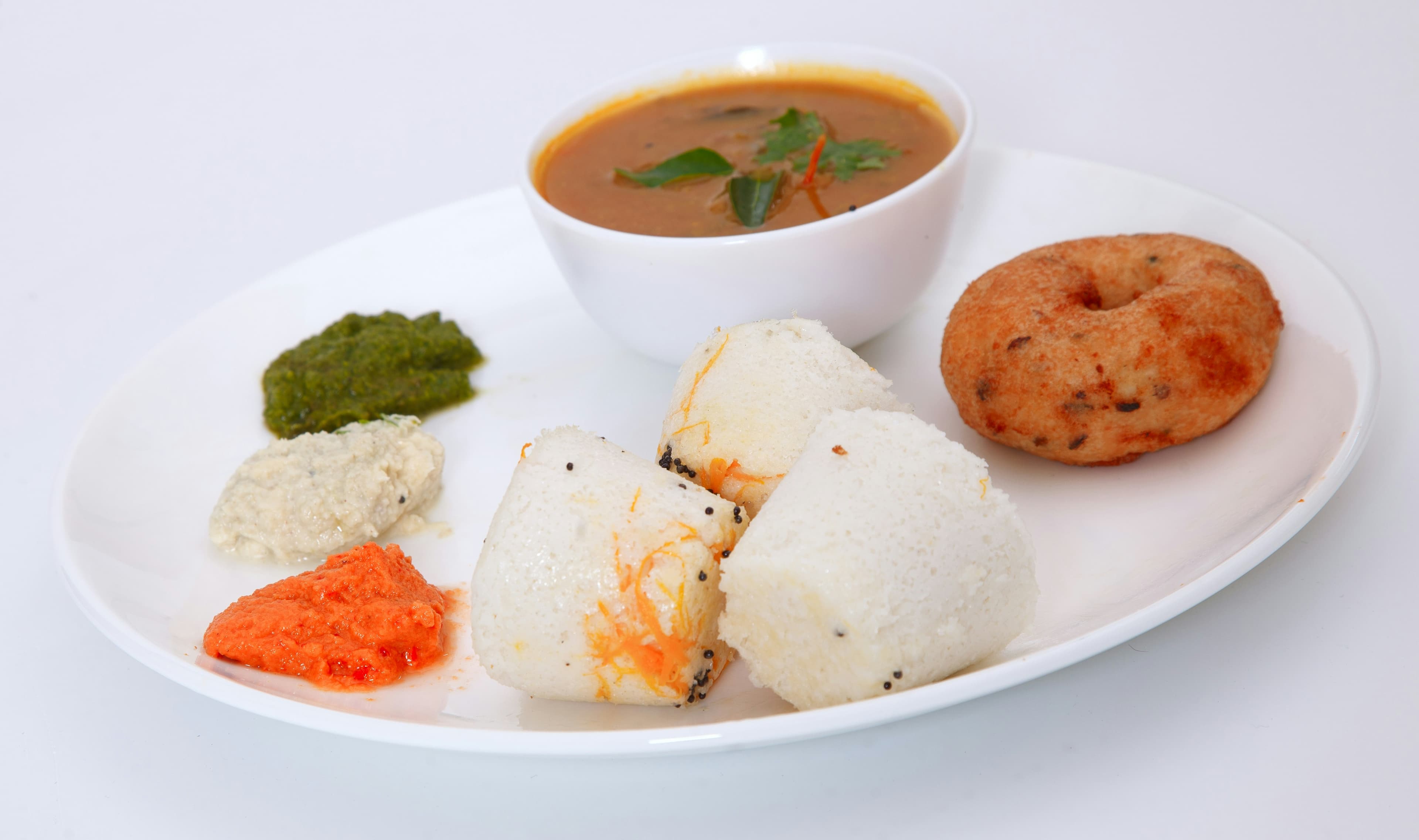
Vidyarthi Bhavan's masala dosa occupies a specific place in any serious conversation about South Indian food. It is not the paper-thin variety that has become standard at most restaurants — it is thick-edged, deeply browned, with a particular crispness that requires precise heat management on a well-seasoned griddle. The potato filling is spiced differently from most places, the coconut chutney and sambar served alongside it have their own character, and the combination has remained essentially unchanged for decades because there has been no reason to change what works.
That recipe, and the technique behind it, is inseparable from the kitchen that produces it. The cooks at Vidyarthi Bhavan work in a specific rhythm, on specific equipment, using a process refined over generations of daily repetition. None of that transfers to an alternative cooking setup or a pop-up arrangement. The food is what it is because of where and how it is made, which is another way of saying that there is no Vidyarthi Bhavan without its kitchen, and there is no kitchen without LPG.
The Broader Restaurant Industry Watching Closely
Vidyarthi Bhavan's announcement has drawn attention across the Indian food service industry in a way that the more general statistics about thousands of restaurants facing closure have not. There is something about a specific, named institution with an 83-year history closing that makes the scale of the crisis comprehensible in human terms. Industry associations have been pointing to the closure in their communications with government bodies as evidence that the commercial LPG shortage is not an operational inconvenience — it is an existential threat to establishments that have been part of Indian food culture for generations.
Smaller restaurants without Vidyarthi Bhavan's profile are closing more quietly. No press statements, no social media announcements, just shuttered doors and staff sent home. The iconic name helps crystallize a conversation that the numbers alone have not been able to force. If a restaurant that has operated continuously since 1943 cannot stay open, the situation has clearly moved past the point where businesses can manage through it on their own.
What the Management Has Said
The restaurant's management has been measured in its public communication — describing the closure as temporary, expressing hope for a resolution, and thanking customers for their patience and support. That restraint is consistent with how Vidyarthi Bhavan has always conducted itself publicly. But behind the careful language is a straightforward reality: they cannot operate without gas, they do not know when gas will be available, and they are not willing to make compromises that would affect the quality of what they serve.
That last point matters. Some restaurants have been rationing their remaining gas, limiting menus, and reducing service hours as a way of extending their operational window. Vidyarthi Bhavan choosing full closure over partial service reflects a standards commitment that is itself part of the brand's identity. Serving a compromised product — a dosa made on inadequate heat, or with substituted ingredients because the full preparation is not possible — would damage something that 83 years of consistency has built. Better to close and come back right than stay open and be something lesser.
When the Doors Reopen
There will be a queue outside Vidyarthi Bhavan the morning it reopens. That much is certain. The regulars who have been making the Gandhi Bazaar trip for years, the visitors who plan Bengaluru trips partly around a meal there, the food writers who consider it a mandatory stop — they will all be back. The restaurant has that kind of hold on people.
What is less certain is how long the closure lasts and how many other establishments do not make it through the wait. Vidyarthi Bhavan has the reputation, the reserves of goodwill, and presumably the financial stability to survive a temporary shutdown. The hundreds of anonymous neighborhood restaurants that are also going dark this week are not so clearly positioned to reopen when supply eventually normalizes. The LPG crisis will end at some point. The question is which pieces of India's restaurant landscape survive to see that happen.
AI Summary
Generate a summary with AI