Honor at MWC 2026: A Humanoid Robot, the World's Thinnest Android Tablet, and a Foldable with a 7,150mAh Battery
Most MWC keynotes follow a predictable rhythm. New phones, updated specs, a few software announcements, applause. Honor's Barcelona showcase on March 1 was not that. The company walked onto the MWC stage and unveiled a humanoid robot, a foldable phone with the largest battery ever put in that form factor, a tablet it claims is the thinnest Android tablet in existence, and a smartphone with a motorized gimbal camera that tracks subjects on its own. If that sounds like four separate press events collapsed into one, that's roughly what it felt like.
The event's theme was 'Believers in AI Future,' and Honor was clearly trying to signal something larger than a product refresh. This was a company explicitly repositioning itself — not as a smartphone brand with some AI features, but as a full AI ecosystem company that happens to make smartphones.
Honor Magic V6: The Foldable Battery Nobody Thought Was Possible
The Honor Magic V6 is the headline hardware for anyone focused on the core product lineup. It's a book-style foldable — the kind that opens like a small book rather than a flip phone — and it carries a reported 7,150mAh battery. That number is significant because battery capacity has been one of the most persistent compromises in the foldable category. Fitting a large cell into a device that needs to fold in half without bulging requires a fundamentally different approach to battery cell design, and 7,150mAh in a foldable is a figure that would be impressive in a standard slab smartphone, let alone a device with a hinge down the middle.
The rest of the spec sheet follows the flagship tier: Snapdragon 8 Elite Gen 5, up to 16GB of RAM, 1TB storage, and 120W charging. Honor hasn't announced pricing yet, but a foldable with those specifications is going to land at a premium. The question the Magic V6 has to answer in real-world use is how the battery life translates in practice — whether that 7,150mAh advantage is as meaningful as it sounds when spread across a larger folding display.
MagicPad 4: 4.8mm Thin and Built Around Spatial Audio
Honor's claim that the MagicPad 4 is the world's thinnest Android tablet at 4.8mm is the kind of spec that sounds like a marketing line until you see what had to be engineered to achieve it. The MagicPad 4 features a 12.3-inch 165Hz OLED display — already a significant step up from the LCD panels that dominate the mid-tier tablet market — paired with eight speakers tuned for spatial audio. Getting eight speaker drivers and an OLED panel into a chassis under 5mm thick is not a trivial engineering problem.
The Snapdragon 8 Gen 5 powering it should handle content consumption and productivity tasks comfortably. Whether the MagicPad 4 can compete with the iPad Pro in actual use — particularly for creative professionals who rely on stylus input and software ecosystem depth — is a different question. But as a showcase of what's possible in Android tablet hardware right now, it's a genuine statement piece.
The Humanoid Robot: Honor's Biggest Swing
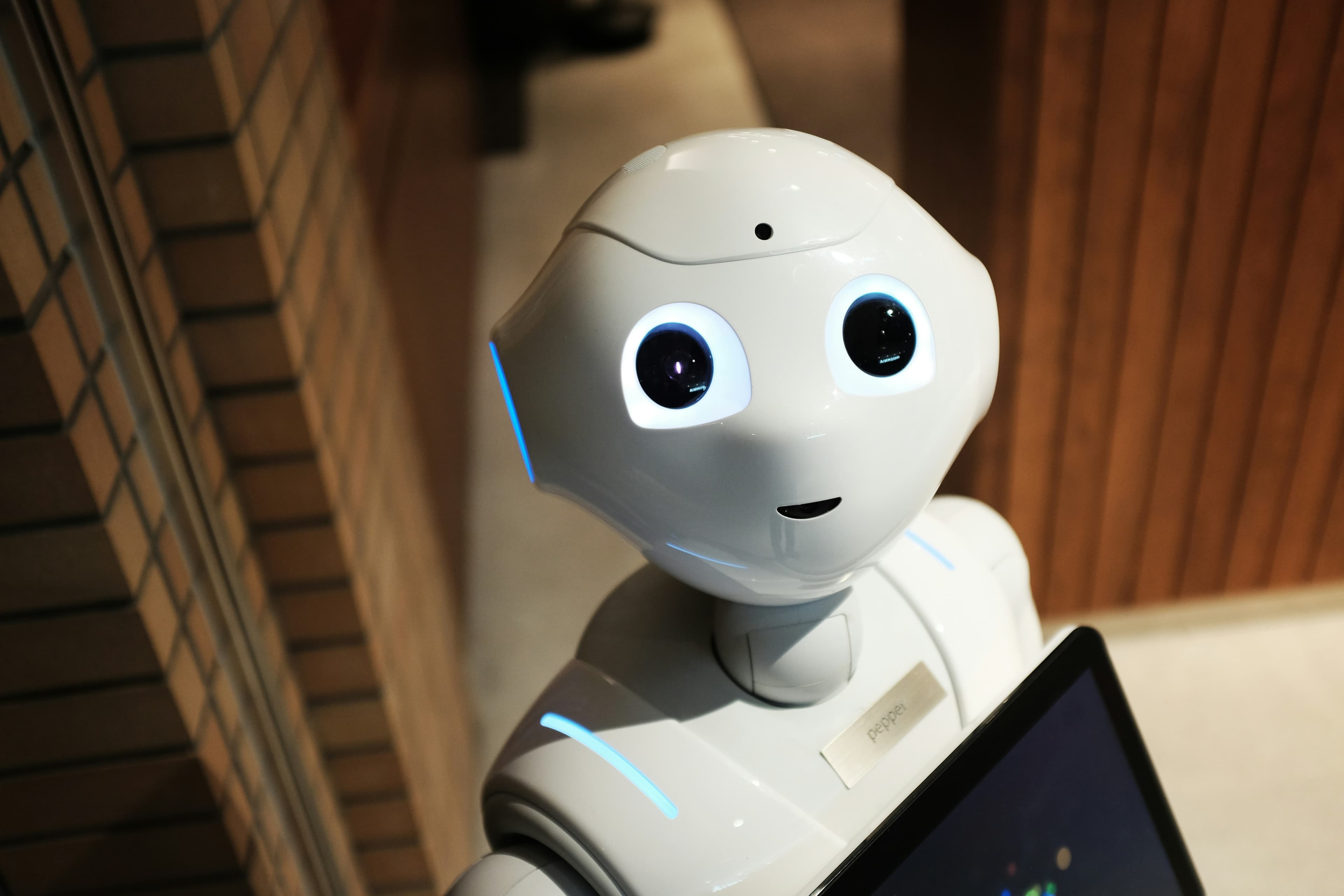
No consumer electronics brand has walked onto an MWC stage and introduced a humanoid robot before. Honor did exactly that. Details were sparse — the robot has a camera mounted at head height, a blue light strip across its body, and was described as a 'full physical AI system' — but the intent behind the announcement is readable even through the limited information. Honor is telling the industry that it sees itself competing in physical AI, not just consumer devices.
The humanoid robot space has gotten genuinely competitive in a short span of time. Tesla's Optimus program, Figure AI, Agility Robotics, and Boston Dynamics have all been building toward commercial applications with varying degrees of progress. Honor entering this category — even at an early stage — is notable because it brings consumer hardware manufacturing scale and distribution relationships that most dedicated robotics startups don't have. Whether the robot is anywhere close to commercial viability is something Honor hasn't disclosed, but the direction is clearly stated.
The Robot Phone: A Gimbal That Moves on Its Own
The most immediately usable of Honor's surprises at MWC was the Robot Phone — a working smartphone with a rear camera mounted on a 360-degree motorized gimbal that autonomously tracks subjects. This isn't a software stabilization feature or a digitally cropped zoom trick. The camera physically moves, following the subject in the frame without any manual input from the user.
For content creators — particularly solo creators who film themselves and can't afford to hire a camera operator — this kind of autonomous tracking built into a phone rather than requiring a separate stabilizer gimbal is a meaningful quality-of-life improvement. DJI has made the OM series of phone gimbals a popular accessory for exactly this use case. Honor is proposing to eliminate the need for the accessory entirely by building the functionality into the phone itself. The durability and real-world reliability of a motorized gimbal integrated into a smartphone chassis will be worth watching closely once units get into reviewers' hands.
What Honor Is Trying to Say About Itself
Stepping back from any individual product, the MWC 2026 keynote was Honor making a coherent argument about its identity. A robot. A robot-camera phone. A tablet built around audio and thinness. A foldable with category-leading battery life. These aren't unrelated products — they're an attempt to sketch the outline of an AI-hardware ecosystem where Honor's software and physical AI capabilities connect across devices, just as Apple's ecosystem ties the iPhone to the Mac to the iPad to the Watch.
Whether Honor can execute on that vision at a global scale — particularly in Western markets where it competes against Samsung, Apple, and Google without the same brand recognition — is the harder question. But as a statement of ambition and engineering capability, the MWC 2026 keynote was one of the more genuinely surprising tech presentations of the past year. Honor arrived in Barcelona as a smartphone company. It left having made the case that it wants to be something considerably larger.
AI Summary
Generate a summary with AI
