Dubai on fire: why Iran is attacking UAE and why UAE is holding back
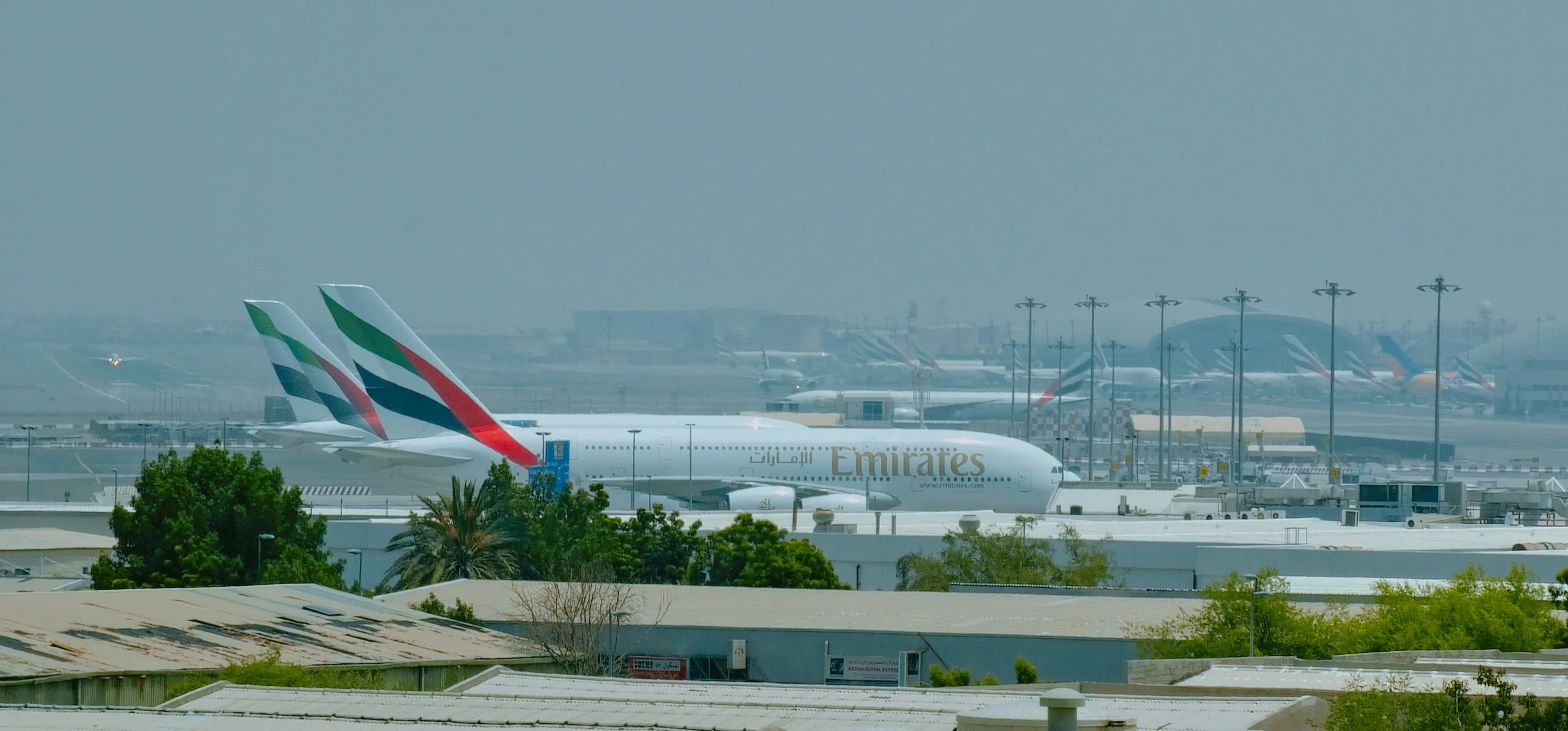
When drones struck a fuel facility near Dubai International Airport and turned the sky into a thick, dark cloud, it hit more than just a runway and a few storage tanks. It disrupted one of the busiest aviation hubs on the planet and sent a blunt reminder that the current Gulf conflict is not staying confined to battlefields. For travellers, airlines, and markets that treat Dubai as a central stopover, the sudden halt of international flights feels less like a distant war story and more like a direct shock to daily life.
In his analysis, Ankit Agrawal explains how this strike fits into a wider pattern of Iranian attacks on Gulf infrastructure and why the United Arab Emirates, despite repeated hits, has avoided any direct military response against Iran. That choice might look like weakness at first glance. In reality, it is tied to the structure of the UAE economy, its military doctrine, and the way the Gulf security system leans on the United States.
What happened at Dubai airport
The latest incident centres on a drone strike near Dubai International Airport that reportedly hit a fuel tank close to airport facilities and ignited a large fire. Within a short window, thick smoke spread across the surrounding area and authorities moved quickly to suspend international operations. Flights that were about to land in Dubai were diverted to nearby airports, creating a ripple effect across the Gulf aviation network and forcing Indian carriers like IndiGo and Air India to pause their Dubai services for the moment.
For a regular passenger checking a flight map, the change is stark. A sky that is usually filled with aircraft icons around the UAE now looks almost empty, with only a handful of emergency or special flights moving through. The video underlines how unusual it is to see Dubai so quiet, given that in normal times it functions as a constant transit point connecting Europe, Asia, Africa, and Australia. When that node goes dark, even temporarily, global air travel and cargo movement feel the strain.
Why Iran is hitting UAE infrastructure
The Dubai strike is not an isolated event. Since the start of the current conflict, Iran has used large numbers of drones and missiles across multiple Gulf targets, including airports, ports, oil facilities, and logistics hubs. According to figures shared in the video, more than 1,600 drones and hundreds of missiles have been launched at the UAE alone, with 285 ballistic missiles, 1,567 drones, and 15 cruise missiles fired toward the country during this phase of the confrontation. Most are intercepted, but interception does not erase the economic damage or the psychological pressure.
Iran’s target selection reflects three clear goals. First, it sees the American military presence at bases like Al Dhafra in Abu Dhabi as a direct enabler of US operations against Iran, so hitting the UAE is a way of punishing a host state that provides airfields and surveillance infrastructure. Second, Tehran views the 2020 Abraham Accords, which brought UAE and Israel into an open security and technology partnership, as a direct threat, especially in areas like intelligence sharing and missile defence. Third, instead of only going after hard military targets, Iran is deliberately striking economic hubs like Dubai airport and the strategic Fujairah port, betting that sustained disruption will pressure Gulf capitals to lean on Washington to dial down hostilities.
How the Dubai shutdown hits the global economy
Dubai International Airport is not just a flashy terminal with luxury shops. It functions as a core transit hub that knits together east–west air traffic. Many flights from India to Europe or North America route through Dubai, and a large share of African and Asian journeys also depend on connections there. When this node goes offline, passengers face cancellations and rerouting, cargo shipments are delayed, and airlines scramble to rearrange schedules and crews.
The video cites estimates that even without a full-scale war, the current level of disruption is costing Emirates airline around 100 million dollars per day, investors more than 5 billion dollars, and Jebel Ali port roughly 500 million dollars in daily losses. Those numbers are not exact down to the last cent, but they give a sense of scale. The point is simple: a long war fought through strikes on economic infrastructure in the UAE does not stay limited to military budgets. It flows into oil prices, shipping costs, tourism, and investment flows far beyond the Gulf.
Why UAE is not striking back at Iran
Given the number of attacks, a natural question arises: why has the UAE not fired its own missiles into Iran in response? Ankit lays out several overlapping reasons. The first is the risk of triggering a much larger Gulf war. If the UAE launches offensive strikes on Iranian territory, Tehran can respond by saturating UAE cities and landmarks with even more drones and missiles. Structures like the Burj Khalifa are not just symbols; they are large, fixed, and visible targets that cannot be moved or hidden in a crisis.
The second reason is economic. Unlike Iran, which has learned to live under heavy sanctions, the UAE has built its rise on predictable stability in aviation, tourism, finance, and shipping. Its brand is safety and convenience. Even the current level of strikes and shutdowns is already hurting airlines, ports, and investors. If Abu Dhabi and Dubai openly enter a direct shooting war with Iran, the hit to confidence could be far worse than the effect of absorbing and intercepting attacks while keeping markets open as much as possible.
There is also a military logic at work. The UAE has invested heavily in defensive systems such as Patriot and THAAD batteries, along with advanced radar networks built to detect and intercept incoming threats. Its doctrine, at least so far, revolves around protecting airspace and infrastructure rather than projecting power deep into an adversary’s territory. That means its systems are optimised for shooting drones and missiles out of the sky, not for running a long offensive campaign against a geographically larger country with its own dense missile arsenal.
On top of that sits the American security umbrella. The UAE counts on the United States to respond at a strategic level if Iran crosses certain red lines. In practice, this creates a division of roles: the UAE focuses on hardening its defences, coordinating with partners like Saudi Arabia and the US, and using diplomacy to manage escalation, while Washington and its allies carry out broader deterrence and any direct strikes they deem necessary. From the UAE’s perspective, joining that fight with its own long-range attacks would invite retaliation that its small territory and highly exposed infrastructure are poorly placed to absorb.
Defence, damage, and civilian risk
Interception statistics can look impressive on paper. The video notes that most of the hundreds of missiles and drones aimed at the UAE in this conflict phase have been destroyed before reaching their intended targets. Still, interception is not a clean solution. Debris from destroyed missiles and drones falls somewhere. In one incident mentioned, a drone fragment reportedly hit a car and killed a person on the ground. Even when defences work as designed, the war still touches civilians through fire, smoke, shockwaves, and fragments dropping into neighbourhoods.
The situation leaves UAE leaders in a difficult position. They face steady strikes on airports and ports like Fujairah, ongoing economic losses, and public anxiety, yet they also know that an aggressive retaliation could turn a limited but painful confrontation into a wider regional war. For now, they are choosing to absorb the blows, keep defences active, cut or suspend some operations where necessary, and rely on American power and diplomacy to manage the bigger contest with Iran.
What this means for the Gulf and travellers
For people on the ground, the explanation does not make airport smoke or flight cancellations any easier. If you live in India and rely on Dubai as your usual transit point to Europe, this kind of disruption can throw off work trips, studies, or family visits with very little warning. For businesses that depend on Jebel Ali or Fujairah as shipping anchors, repeated strikes translate into delays, higher insurance costs, and tough choices about whether to reroute through less efficient ports.
At the same time, the video hints at how other hubs might see opportunity in this turbulence. Comments already mention places like Navi Mumbai as potential beneficiaries if airlines and cargo operators look for alternative hubs with more predictable security conditions. That is a long game and not a quick switch, but it captures a broader point. When a core connector like Dubai is under pressure, the effects are felt well beyond the Gulf, and other regions start thinking more seriously about building their own capacity.
AI Summary
Key insights from this article