Disney Research shows AI-powered robots bringing animated characters to life at Nvidia GTC 2026
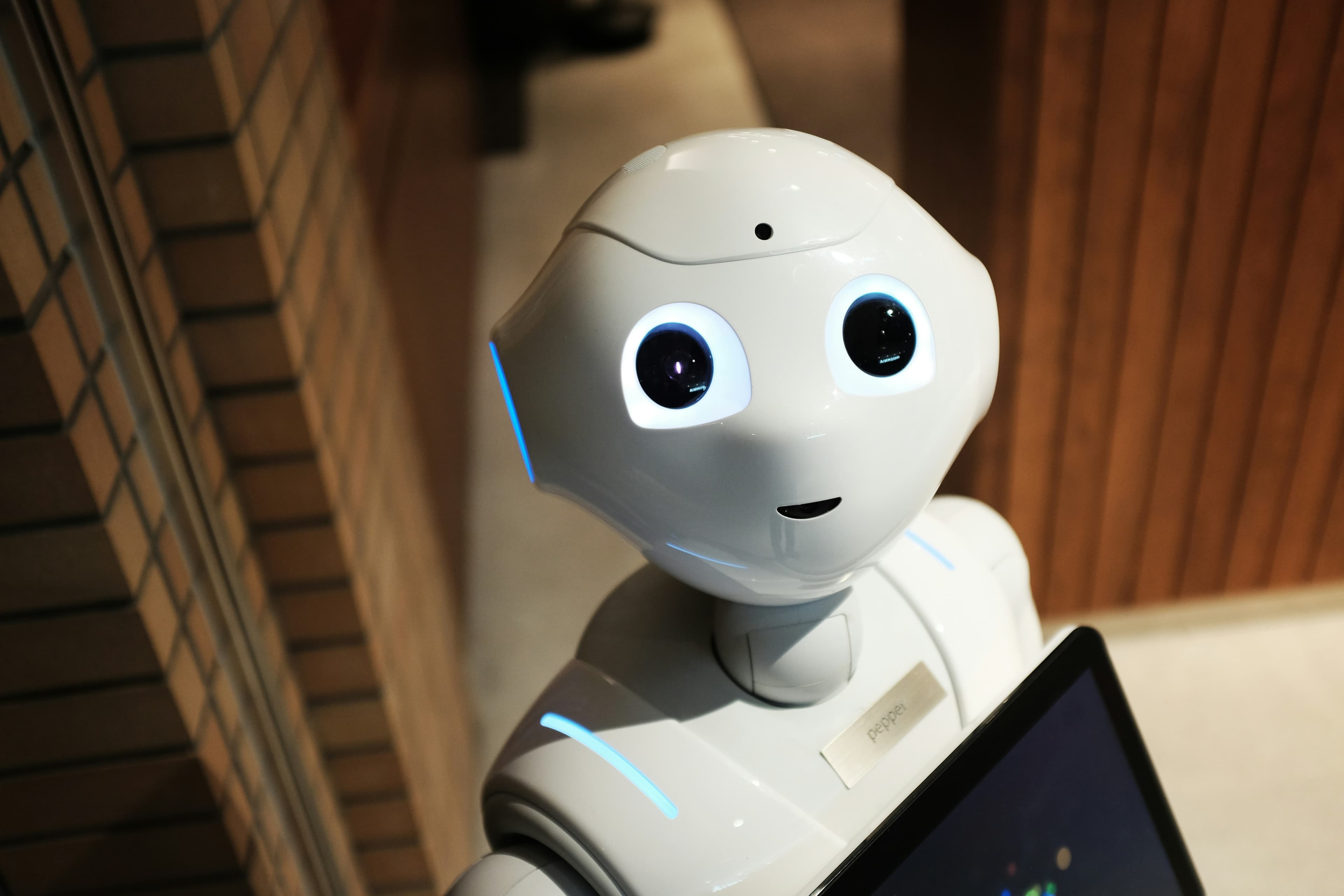
Disney Research presented one of the more attention-grabbing sessions at Nvidia's GTC 2026 conference on March 16, demonstrating physical robots trained to move and behave like the company's animated characters in real-world environments. The robots were trained using Nvidia's Isaac simulation platform and reinforcement learning, a training method where an AI agent learns behaviors by receiving rewards for successful actions rather than being given explicit instructions. The result is a robot that can walk, gesture, and interact in ways that feel consistent with how a character moves on screen.
This is not Disney's first attempt at character robotics. The company has been deploying animatronic figures in its theme parks for decades, and some of those figures have become sophisticated enough to perform complex scripted sequences. What the GTC presentation introduced is different in kind. Scripted animatronics follow fixed programs. A reinforcement-learning robot learns to respond to its environment in real time, which means it can adapt to things that were not anticipated during programming.
How Nvidia Isaac fits into the Disney pipeline
Nvidia Isaac is a simulation environment specifically designed for training robots. The platform allows engineers to build detailed virtual replicas of physical spaces and robot bodies, then run millions of simulated training episodes at speeds that would be impossible in the real world. A training run that would take months of physical operation can be compressed into hours inside Isaac. Disney Research used Isaac to create virtual versions of the character robots and ran reinforcement learning training entirely in simulation before transferring the learned behaviors to the physical hardware.
The transfer from simulation to physical hardware is the hardest part of this kind of pipeline. Simulated environments cannot perfectly replicate the friction, weight distribution, and sensor noise of real robots, which means behaviors that work perfectly in simulation sometimes fail in practice. Disney Research's presentation addressed this directly, describing the techniques they used to make their simulation environments accurate enough that the transfer gap was small. The specific method they discussed involved adding controlled randomization to physical parameters during training, a technique called domain randomization, which forces the robot to develop behaviors that are more tolerant of real-world variation.
What reinforcement learning adds that scripted animation cannot
Scripted animatronics are designed to perform specific sequences in response to specific triggers. A traditional Disney animatronic might wave when a guest approaches within a certain distance, or turn its head when a sound sensor detects noise above a threshold. The behavior is predetermined. A reinforcement-learning robot has a learned policy, a set of rules its neural network uses to decide what to do next based on sensor readings from its body and environment. That means it can handle situations that were never explicitly programmed.
In the GTC demonstration, one of the character robots was shown maintaining its balance after being physically pushed, a task that scripted systems handle poorly because the recovery motion needs to vary depending on exactly how hard and in what direction the push was applied. The robot's balance recovery was handled entirely by its learned policy. That kind of adaptive physical response is what opens the door to deploying these robots in environments with unpredictable elements, specifically theme parks with thousands of guests who do not behave predictably.
Theme park deployment and the practical constraints Disney faces
Deploying AI-trained robots in public spaces with children and guests of varying ages and behaviors introduces safety requirements that purely technical demonstrations do not have to address. Disney's theme parks operate under strict safety protocols, and any robot that interacts with guests would need to pass the same liability and mechanical safety certification processes that apply to rides and attractions. That process is separate from whether the robot can technically perform its tasks.
Disney Research did not announce a deployment timeline or name specific parks where the character robots would appear. The GTC presentation was framed as a technical research disclosure rather than a product announcement. Disney has been quietly deploying earlier-generation character robots in limited settings. The company introduced a free-robling Baby Groot robot at Disney California Adventure in 2023, which used a different, less sophisticated motion system than the reinforcement-learning approach shown at GTC. That earlier deployment demonstrated Disney's interest in moving characters off fixed platforms into more open guest interaction zones.
The broader context at GTC and where physical AI is headed
Disney Research's session was one of many at GTC 2026 focused on what Nvidia has been calling physical AI, a category that covers robots and autonomous systems that operate in the real world rather than purely in software. Jensen Huang spent a portion of his keynote on Monday discussing the Isaac platform and its role in training humanoid and industrial robots, with partner companies including Boston Dynamics, Figure AI, and 1X Technologies also presenting sessions during the conference week.
Disney Research's work sits at a specific intersection of that broader push: consumer-facing robots where behavioral quality and character fidelity matter as much as locomotion capability. Most physical AI development to date has focused on industrial settings, warehouse automation, and logistics. Disney's GTC presentation is one of the first public demonstrations by a major entertainment company of applying the same simulation-to-real training pipeline to a consumer context. The next public update from Disney Research on this work is expected at ICRA 2026, the International Conference on Robotics and Automation, scheduled for May in Atlanta.
AI Summary
Generate a summary with AI