Cobalt supply study raises serious concerns for clean energy battery demand
The clean energy transition runs on batteries, and batteries run on cobalt. That dependency is now under fresh scrutiny. A new study examining global cobalt availability found that supply chains for the mineral are heavily concentrated, geographically fragile, and potentially insufficient to meet the volume of battery production that electric vehicle and grid storage targets require over the next two decades.
The numbers are not comfortable reading for policymakers. Roughly 70 percent of the world's mined cobalt comes from the Democratic Republic of Congo, a country with significant infrastructure deficits and a history of supply disruptions. Processing is even more concentrated: China refines approximately 80 percent of global cobalt supply. That is two chokepoints sitting in sequence, and neither shows signs of rapid diversification.
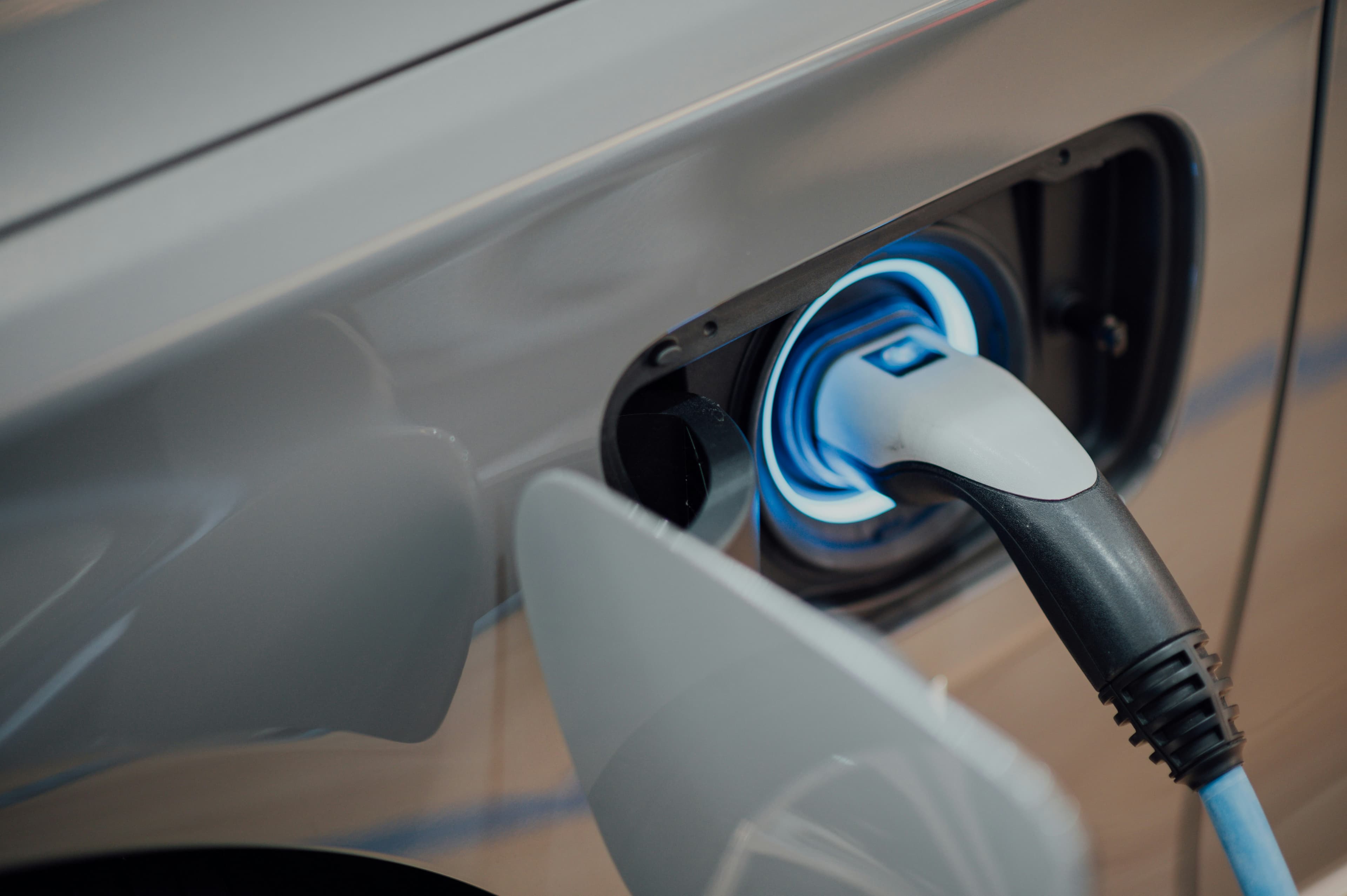
Why cobalt is so embedded in current battery chemistry
Cobalt's role in lithium-ion batteries is primarily about stability. In NMC cathodes, which combine nickel, manganese, and cobalt, the cobalt content prevents the cathode from overheating and degrading under charge cycles. Higher cobalt ratios tend to produce batteries with better longevity and thermal management. That is why early electric vehicle batteries used relatively high cobalt concentrations, sometimes 20 percent or more of cathode mass.
Battery manufacturers have been reducing cobalt content for years, moving from NMC 111 formulations toward NMC 811, which uses eight parts nickel to one part manganese and one part cobalt. But lower cobalt content per battery does not fully offset demand growth when the number of batteries being produced is scaling exponentially. The International Energy Agency projected in its 2023 Critical Minerals Outlook that cobalt demand for clean energy applications could increase by more than four times current levels by 2040 under accelerated transition scenarios.
What the supply study actually found
The researchers modeled cobalt supply trajectories against demand scenarios tied to electric vehicle adoption rates in major markets including the European Union, the United States, and China. They found that under moderate to high adoption scenarios, known cobalt reserves and current mine development pipelines would likely fall short of demand within the 2030s, creating a supply gap that cannot be closed quickly because new mines take seven to fifteen years to move from discovery to production.
The study also stress-tested the supply chain against disruption scenarios. A prolonged political crisis in the DRC, which has happened before, would affect global cobalt availability within months. The 2022 cobalt price spike, which briefly pushed prices above $80,000 per tonne before falling sharply, illustrated how quickly market sentiment around supply concentration can move. Price volatility of that magnitude makes long-term battery supply contracts difficult to price and complicates investment planning for manufacturers.
The battery chemistry alternatives being pursued
Lithium iron phosphate, known as LFP, uses no cobalt at all. It is already the dominant chemistry in Chinese electric vehicles and stationary storage applications, accounting for more than 60 percent of battery production in China in 2023. LFP has lower energy density than NMC, meaning batteries are heavier and larger for the same range, but the cost advantage and supply chain simplicity have made it attractive for mass-market vehicles and grid applications where space is less constrained.
Tesla shifted its standard range Model 3 and Model Y to LFP batteries in 2021, citing both cost and durability advantages. BYD builds its entire passenger vehicle lineup on LFP. Western manufacturers have been slower to adopt LFP partly because of patent licensing complexities and partly because performance benchmarks for premium vehicles still favor higher-energy NMC formulations.
Sodium-ion batteries are also advancing as a cobalt-free option. CATL, the world's largest battery manufacturer, began commercial sodium-ion production in 2023. Sodium-ion chemistry uses abundant materials and eliminates cobalt entirely, though current energy density is lower than both NMC and LFP. For short-range urban vehicles and grid storage, sodium-ion is already commercially viable.
Recycling as a partial supply answer
Battery recycling is sometimes presented as a way to reduce dependence on primary cobalt mining. The logic is sound in theory: cobalt recovered from end-of-life batteries re-enters the supply chain without requiring new mining. In practice, the recycled cobalt supply available today is small relative to demand because the majority of electric vehicles sold in the past decade have not yet reached end of life.
The European Union's Battery Regulation, which came into force in 2023, mandates minimum recycled content in new batteries: 16 percent recycled cobalt by 2031 and 26 percent by 2036. Those targets are achievable in principle, but they require recycling infrastructure that does not yet exist at the required scale in Europe. The current European recycling capacity for lithium-ion batteries sits well below what the regulation will require within a decade.
What the study recommends for policy and procurement
The researchers recommend three adjustments to current policy. First, accelerating LFP and sodium-ion adoption in applications where energy density is not the binding constraint, specifically grid storage and urban transport. Second, building strategic cobalt reserves at the national level, similar to the US Strategic Petroleum Reserve, to buffer against short-term supply shocks. Third, investing in artisanal mining formalization in the DRC, where roughly 15 to 20 percent of cobalt production currently comes from unregulated small-scale operations with significant safety and human rights concerns.
The study's authors plan to present their supply gap projections to the European Commission's Critical Raw Materials Board in the second half of 2026, ahead of the commission's scheduled review of the Critical Raw Materials Act implementation timeline.
AI Summary
Generate a summary with AI