Apple Launches New MacBooks, Processors, and Studio Displays at March Event
Apple does not do quiet weeks. But even by its own standards, the first week of March 2026 was something. Spread across Monday through Wednesday, with simultaneous hands-on experience events in New York, London, and Shanghai, the company announced seven products in three days — touching nearly every corner of its Mac and display lineup. The headliner most people didn't see coming was a $599 laptop called the MacBook Neo. The headliner most professionals did see coming was the MacBook Pro with M5 Pro and M5 Max chips, which turned out to be a bigger leap than the spec sheets initially suggested.
The week also included updated Studio Displays — one of which, the Studio Display XDR, is an entirely new product replacing the long-discontinued Pro Display XDR. For anyone who tracks Apple's hardware roadmap, this wasn't just a spec refresh week. It was a repositioning of where the Mac sits in a market now defined by AI workloads, on-device intelligence, and price competition from Windows laptops that have gotten genuinely good.
MacBook Neo: Apple's $599 Bet on a New Entry Point
The MacBook Neo is the first Mac to ship with an iPhone-grade chip. Specifically, it runs the A18 Pro — the same processor that debuted in the iPhone 16 Pro in 2024, with a minor configuration change: the GPU has five cores rather than six. At $599, it undercuts the MacBook Air by several hundred dollars and puts a genuinely capable Apple Silicon machine within reach of students, budget-conscious buyers, and anyone who doesn't need the full headroom of an M-series chip.
Early benchmarks put its single-core CPU score at 3,461 and multi-core at 8,668 — roughly in line with what you'd expect given the shared silicon with the iPhone 16 Pro. That's fast enough for everyday computing, web browsing, coding, and light creative work. It is not the machine for 4K video editing or local AI model inference. Apple is very clear about who this is for, and the four available colors — cheerful and consumer-oriented — underline that positioning.
There are some real tradeoffs. The base $599 model ships without Touch ID. The speaker system has two side-firing drivers compared to four on the MacBook Air and six on the Pro — though hands-on reports from the New York event noted the audio was better than the hardware suggests on paper. Apple is also limiting purchases to two units per customer, at least initially, which implies they expect demand to be high and supply constraints to be real.
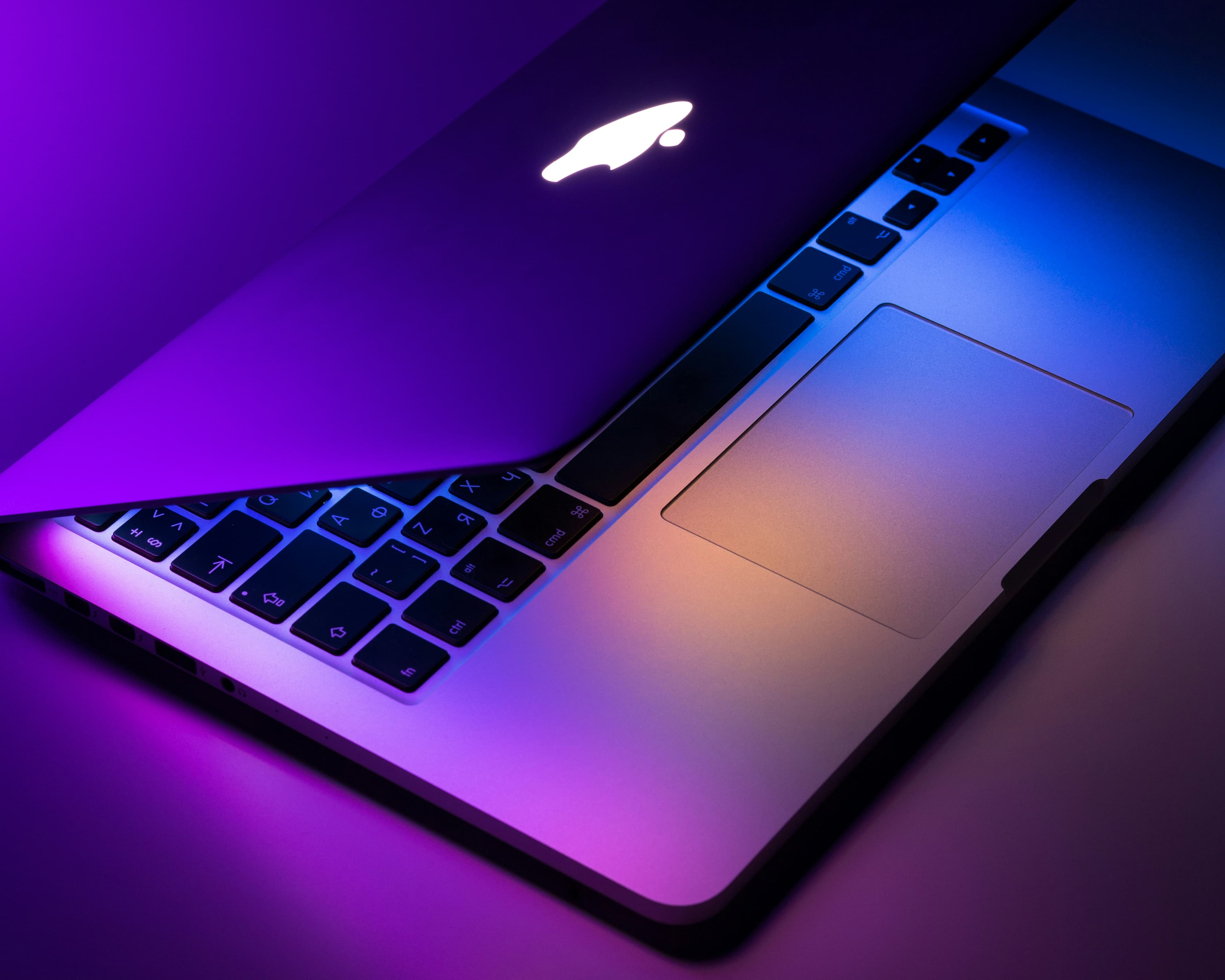
MacBook Pro M5 Pro and M5 Max: The Upgrade That Surprised People
Coming into the week, the MacBook Pro announcement felt almost like a formality. M4 Pro was already fast. M5 Pro would be faster. Fine. But the actual numbers Apple shipped with are harder to dismiss than expected. The M5 Pro and M5 Max chips deliver up to four times the AI performance of the previous generation, and up to eight times compared to M1 models. The new Neural Accelerator embedded in each GPU core is the key architectural change — this isn't just a frequency bump, it's a structural rethinking of how the chip handles AI inference.
For professionals running LLMs locally, editing 4K and 8K footage, or working with tools like DaVinci Resolve or Topaz Video, the performance gains are tangible. Apple claims up to 3.5 times faster AI video enhancement in Topaz Video compared to the M4 Max, and up to 5.4 times faster video effects rendering in DaVinci Resolve versus M1 Max. SSD speeds have also doubled, reaching up to 14.5 GB/s, which matters enormously for anyone moving large datasets or working with massive project files.
The new MacBook Pro also ships with Apple's N1 wireless chip — a custom-designed component that enables Wi-Fi 7 and Bluetooth 6. That detail is easy to overlook amid the processor headlines, but faster, more reliable wireless connectivity matters for professional workflows, particularly in studio and production environments. Battery life holds at up to 24 hours on the 16-inch model. The MacBook Pro with M5 Pro now starts with 1TB of storage as the base configuration, and M5 Max models start at 2TB — upgrades from the previous generation's defaults.
MacBook Air M5: A Quieter Upgrade With a Notable AI Angle
The MacBook Air M5 follows the same template as its predecessors — no design change, no new ports, no dramatic visual refresh. The M6 generation, reportedly arriving in late 2026 or 2027, is expected to bring OLED displays and potentially touchscreen support. For now, the Air M5 is all about what's inside. Apple's headline claim for the Air is that the M5 chip is up to four times faster at AI tasks compared to M4, making on-device Apple Intelligence features noticeably snappier across writing tools, image generation, and Siri interactions.
The price has moved in a complicated direction — depending on configuration, it's simultaneously higher and lower than before, as Apple has shuffled the base storage and memory options. Anyone upgrading from an M2 or M3 Air will notice a meaningful jump. Anyone coming from an M4 Air that they bought six months ago is probably sitting this one out, which is entirely reasonable.
Two New Studio Displays — One of Them Genuinely Exciting
Apple updated the standard Studio Display with a 12MP Center Stage camera that now supports Desk View — the same feature available on iPhone and iPad that lets the camera simultaneously show your face and a top-down view of your desk. The speaker system has been upgraded to a six-speaker spatial audio configuration with four force-cancelling woofers delivering 30 percent deeper bass than the previous generation. Thunderbolt 5 connectivity is now included, with two ports that support daisy-chaining up to four displays for a combined resolution approaching 60 million pixels. The price stays at $1,599, which remains hard to justify for most people but at least gets harder to argue with on the feature side.
The Studio Display XDR is the more interesting product. Apple positioned it as a replacement for the Pro Display XDR, priced at $3,299 — significantly less than its predecessor — and it adds mini-LED backlighting with over 2,000 local dimming zones, 2,000 nits of peak HDR brightness, a 120Hz refresh rate with Adaptive Sync, and a wider color gamut. For video editors, colorists, and photographers who need reference-grade accuracy, this is the display Apple has been missing from its lineup since the Pro Display XDR aged out of being a competitive option. The ProMotion display at that price point, for that use case, is a genuinely strong argument.
The Bigger Picture: Apple and the AI Hardware Race
Every product Apple announced this week was framed, to some degree, around AI performance. The MacBook Neo's A18 Pro chip handles AI workloads three times faster than the best Intel alternative Apple cited. The MacBook Pro's M5 chips are structurally redesigned to accelerate inference. Even the Studio Display's Center Stage camera upgrade is, functionally, an on-device computer vision feature.
This isn't marketing padding. The underlying shift in how Apple Silicon is being architected — with Neural Accelerators embedded at the GPU core level in the M5 series — reflects a real engineering commitment to making the Mac the best platform for local AI workloads. In a market where cloud AI costs are significant and privacy-sensitive workloads increasingly demand on-device processing, that's a defensible position. Whether Apple Intelligence's software side can actually deliver experiences that match the hardware capability is a separate, ongoing conversation.
All products are available for pre-order from March 4, with in-store availability beginning March 11. For anyone who has been waiting on a Mac purchase, this week gave them a lot to think about — from a $599 entry point that didn't exist before, to a pro display that finally fills the gap the Pro Display XDR left behind. That's not a bad week's work.
AI Summary
Generate a summary with AI

