18-Year-Old Swimming Prodigy Breaks 100m Freestyle World Record
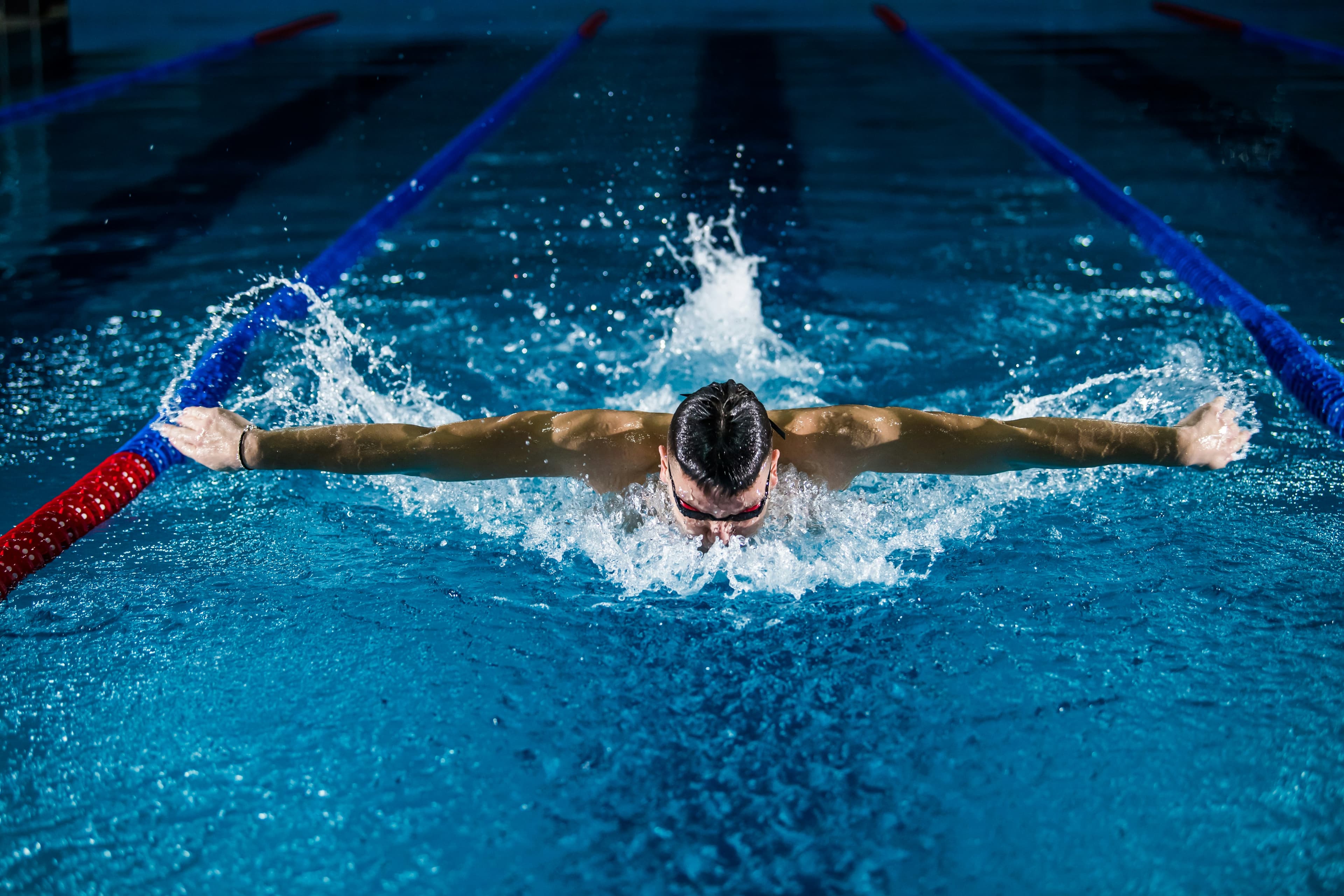
Swimming world records do not fall often, and when they do, they rarely fall by margins that make people stop and look at the scoreboard twice. Today at the National Trials, an 18-year-old touched the wall in 46.85 seconds in the 100-meter freestyle — beating the previous world record by 0.09 seconds, a gap that sounds small until you understand that at the elite level of this event, hundredths of a second separate the best swimmers on earth. Nearly a tenth is not an incremental improvement. It is a statement.
The swimmer's age is the part that recalibrates everything else about this result. World records in the 100 freestyle are typically set by athletes in their mid-to-late twenties, at the peak of a career built across a decade of elite competition. To set one at 18 — at a domestic trials meet rather than an Olympic final or World Championship — suggests a physical ceiling that has not yet been approached, a technique that is already refined beyond what most competitors reach at any point in their careers, and a competitive environment that is about to change significantly for everyone else in the event.
Breaking Down the 46.85
The 100-meter freestyle is two lengths of a 50-meter pool, and the race splits tell a story that the final time alone does not fully convey. Elite swimmers are evaluated on their first-fifty turn time and their back-half speed, which is where physical conditioning and stroke efficiency under fatigue determine the outcome. Preliminary analysis of today's swim shows a 50-meter split that was already at world-record pace, followed by a back half that held rather than deteriorated — the characteristic of a swimmer whose aerobic capacity and stroke mechanics remain intact when oxygen debt is highest.
The underwater dolphin kick off the start and the turn — one of the most technically demanding and physically powerful elements of modern competitive freestyle — was notably extended and powerful. Coaches watching from the stands described it as the most efficient underwater phase they had seen in the event since the generation of swimmers who redefined those mechanics in the early 2010s. That kind of assessment, from people who have spent decades watching the world's fastest swimmers, carries weight that goes beyond the number on the scoreboard.
The Age Context and What It Means for Longevity
Swimming has a complicated relationship with age and peak performance. The sport produces occasional teenage prodigies — Michael Phelps won his first Olympic gold at 19, Ian Thorpe was breaking world records at 15 — but the 100 freestyle in particular has historically rewarded physical maturity and the accumulated technical refinement that comes from years of elite competition. The swimmers who have held the world record in this event have generally been at least 22 or 23 when they set it.
An 18-year-old breaking the record at a domestic meet, with what appeared to be significant physical reserve still available — not visibly struggling at the finish, stroke rate holding steady through the final 15 meters — is the kind of performance that coaches and sports scientists flag as potentially indicating a multi-year peak rather than an early burst that plateaus. If the physiological development that typically adds strength and aerobic capacity through the early twenties continues on its normal trajectory for this swimmer, the current record may not be the floor for what they will eventually produce.
The Olympic Implications
Today's time is the fastest ever recorded by a human being in a long-course pool over 100 meters freestyle, which means this swimmer will arrive at the next Olympics as the individual to beat in the marquee sprint event of competitive swimming. The 100 freestyle final at the Olympics is one of the most-watched events of the Games — the search for the world's fastest swimmer in the pool draws audiences comparable to the 100-meter sprint on the track. Arriving at that event as the world record holder and the youngest person ever to hold it creates an expectation environment that can be as much a burden as an advantage.
The competitive field is not static. The swimmers who currently sit second and third fastest in the world are not going to step back and concede the event. Several competitors who were already within striking distance of the previous record will recalibrate their training around the new benchmark and may close the gap by the time the Olympic final arrives. Sprint swimming at the elite level is a small world where everyone watches everyone's training data, race videos, and competition schedules with forensic attention. Today's performance will be studied intensively by every other swimmer in the event.
The Coach and Training System Behind the Record
World records in individual sports are collaborative achievements even when only one person enters the water. The coaching relationship, the training infrastructure, the sports science support, and the competitive program that has built an 18-year-old into a world-record holder are part of the story that post-race coverage tends to compress into a brief acknowledgment before moving on to the athlete's reaction. The training block that produced today's performance reportedly involved a significant technical overhaul of the underwater phase completed in the past 18 months — the kind of refinement that shows up in race video but only registers as a time improvement after months of integrated practice.
The swimmer's home training program has produced national-level competitors before, but nothing at this level. Today's result elevates the program's profile substantially and will likely attract attention from other young swimmers whose families are considering where to place their children in a formative training environment. The ecosystem around elite sport is competitive at every level, not just the pool.
The Reaction in the Pool and on the Scoreboard
The moment when a swimmer looks at the scoreboard after a race and sees a world record next to their name is one of sport's more genuine emotional moments, partly because the physical exhaustion of the swim and the cognitive reality of the achievement arrive simultaneously. Video of today's finish shows the characteristic double-take — the swimmer looking at the board, then looking again — followed by the kind of reaction that requires no translation regardless of what country you are watching from.
The crowd at the National Trials — a swimming-knowledgeable audience that understood exactly what they had witnessed — provided the response the moment deserved. These are the rare days in sport when the record book changes and everyone in the building knows they were present for it. For an 18-year-old at the beginning of what may be a very long career, the harder question is what comes next — and whether the record that ended today's meet will still belong to the same person when the Olympic starting blocks are chalked up.
AI Summary
Generate a summary with AI